Project Management Golden Triangle in 2026: Master Quality–Cost–Time Trade-offs (and the Triple Constraint)
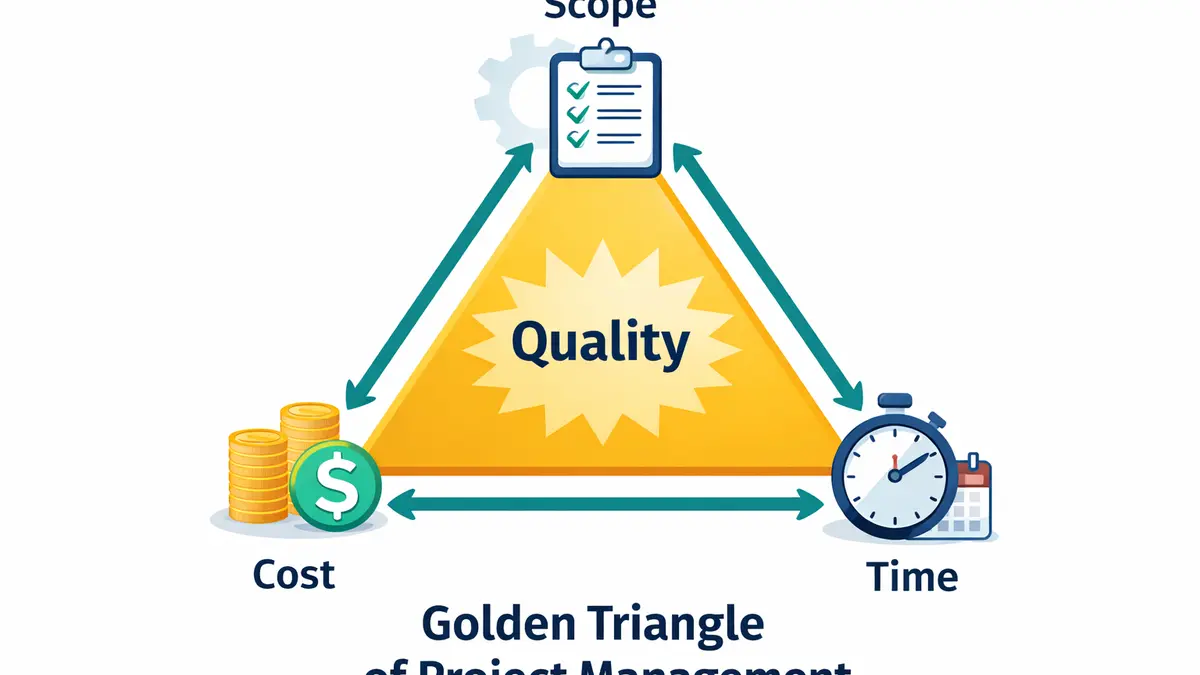
In 2026, project teams face shorter delivery cycles, tighter budgets, higher expectations for quality, and more stakeholders who can change priorities midstream, which makes the project management golden triangle a practical decision framework rather than a textbook concept. When leadership fixes an immovable launch date, when a client adds requirements late, or when procurement cuts spend during execution, the triangle helps you explain trade-offs in plain language and keep the work coherent. You do not “win” on one side without paying somewhere else, and the real skill is choosing the right payment method—scope, time, money, or explicit quality thresholds—before reality forces the worst one. As a 2026 benchmark, a compiled set of project management statistics reports that only about 34% of organizations say they complete projects “most of the time or always” on time (with similar pressure on staying within budget), which highlights the gap between ambition and delivery in many portfolios.
What the Golden Triangle really means: definition, synonyms, and why it drives better decisions
The golden triangle in project management describes the interdependence between three dominant constraints—most commonly Quality, Cost, and Time—and it states that you must rebalance the system whenever one constraint changes. In English-language frameworks, you will also see the triple constraint or iron triangle expressed as Scope, Cost, and Time, with quality treated as an outcome of controlling those constraints rather than a separate vertex. This dual vocabulary creates real confusion in cross-functional environments: one group says “quality,” another says “scope,” and both think the other side “doesn’t get it,” even though they describe the same compromise mechanism. The triangle is not a rhetorical excuse to underdeliver; it is a method to make trade-offs explicit, auditable, and negotiable so sponsors can decide consciously instead of drifting into hidden sacrifices.
QCT vs Scope–Cost–Time: how to align language and avoid stakeholder conflict
The Quality–Cost–Time version resonates strongly in many operational teams because it mirrors what people feel day to day: when you demand “faster” and “cheaper,” the silent victim is often quality through reduced testing, weaker change control, rushed reviews, and growing technical debt. The Scope–Cost–Time version is excellent for delivery governance because it links directly to controllable levers—features, budget, and schedule—and it encourages teams to reshape scope when time is fixed. Both models converge if you define what “quality” means in your context and treat scope as the most adjustable element when a constraint becomes rigid. A simple alignment rule works well in 2026: declare what is non-negotiable (compliance, security, reliability, a release window) and what is flexible (optional features, depth of customization, release sequencing), then map every change request to one triangle vertex and one explicit compensating move.
The core rule: when one side moves, at least one other side must respond
The golden triangle behaves like a conservation law applied to project delivery: if you change one constraint, you must compensate on another constraint or the project becomes unstable and the plan collapses later under pressure. If you compress the schedule without reducing scope and without increasing resources, you almost always degrade quality because teams cut corners on design, validation, documentation, or operational readiness. If you cut budget without moving the deadline, you often reduce scope, shift work to cheaper alternatives, or accept riskier compromises that reappear as defects after launch. If you expand scope with the same budget, the typical outcomes are longer timelines, a quality dip, or a staged release approach that must be communicated and governed rather than improvised. The triangle’s value is that it helps you say “yes, but” professionally—yes to the goal, but only with a transparent exchange that preserves viability.
The “fast, cheap, good” shortcut: helpful, but only if you define “good” precisely
The classic “fast, cheap, good” slogan works because it forces people to acknowledge trade-offs, but it becomes dangerous if “good” stays vague and subjective. “Good” might mean regulatory compliance, performance, security, usability, maintainability, brand perception, or operational stability, and those dimensions do not carry the same weight across industries. A team can ship fast and meet the written requirements yet fail on adoption, or ship a delightful experience while missing reliability targets, which destroys business value even if the project “delivered.” To make the triangle operational, translate quality into measurable acceptance criteria and connect each criterion to concrete activities—automated tests, code reviews, user validation sessions, security checks, or release readiness gates. When you do that, the triangle stops being a poster and becomes a steering mechanism that lets you quantify consequences and choose deliberately rather than gamble.
Break down each vertex: what you are actually controlling in real projects
A useful golden triangle starts with practical definitions of each constraint, otherwise teams argue about abstractions and miss the real levers. Time includes target dates, milestones, dependencies, actual team capacity, environment readiness, procurement lead times, and deployment windows, so it is more than “duration.” Cost includes budget, internal effort, tooling, vendor spend, coordination overhead, specialist availability, and opportunity cost, because a project that absorbs key people often blocks other initiatives. Quality includes fit to requirements, robustness, security, performance, usability, maintainability, and sometimes sustainability or ESG-related constraints if the organization has commitments. In 2026, this decomposition matters even more because AI-assisted workflows can speed production while increasing risk if quality thresholds and governance are not explicit and enforceable.
Time: separate fixed dates, workload, dependencies, and variability
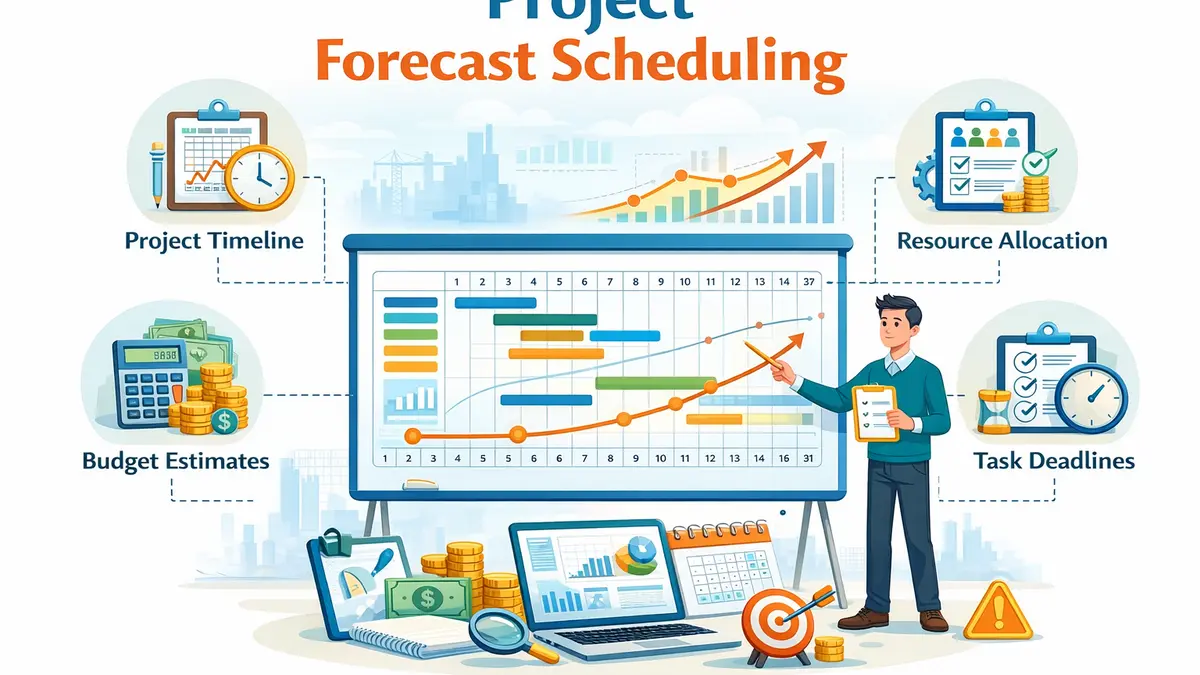
Time management fails when teams confuse a fixed date with feasibility, because a date can be non-negotiable while the path to reach it must remain flexible. A realistic schedule accounts for variability—interruptions, incidents, feedback loops, rework, staffing changes, approval delays, and release constraints—which is often the difference between a perfect Gantt chart and a workable plan. Clarity improves when you name the true driver behind the date, such as an industry event, an end-of-year cutover, a regulatory deadline, a platform migration, or a market opportunity, because each driver implies a different risk tolerance and contingency strategy. To stabilize time, protect critical dependencies, reduce multitasking, and decide your delivery strategy early, such as shipping a minimum viable release at the fixed date and adding increments afterward. This approach keeps the triangle honest because it turns “we must ship by then” into “we will ship this by then, and here is how the rest follows.”
Cost: go beyond the visible budget to avoid false savings
Cost control often breaks down because the visible budget rarely reflects the total cost, especially when internal staffing is not fully attributed or when coordination overhead is ignored. A budget cut can trigger a cascade: fewer tests, reduced change management, lighter user training, and underinvestment in architecture, which degrades quality and inflates post-launch maintenance. Conversely, throwing people at a deadline does not always accelerate delivery, because onboarding time, knowledge transfer, and communication complexity create diminishing returns and can even slow the team if governance does not scale. Smart cost management distinguishes “cost to deliver” from “cost to succeed,” because delivering a product that users cannot adopt is spend without value. In 2026, this distinction becomes more visible as organizations invest heavily in tooling and governance to reduce the hidden cost of poor visibility and late decisions.
Quality: turn a vague expectation into verifiable acceptance thresholds
Quality is not a feeling; it is a promise you can verify, and you make it governable when you translate it into explicit acceptance criteria and observable outcomes. Functional quality is about meeting real needs, technical quality is about reliability, security, performance, and maintainability, and adoption quality is about usability, training, and the ability of business teams to generate value from what you ship. Once you define these layers, you can invest where it matters most, such as prioritizing security and accepting a simpler interface, or prioritizing adoption and deferring nonessential features to later releases. Many quality issues originate from “implicit scope creep,” where small additions dilute testing time and increase defect rates while the calendar stays fixed. A simple protection mechanism helps: entry and exit criteria for testing, a strict definition of done, and non-regression rules that remain stable even under deadline pressure.
Trade-offs without improvisation: a repeatable 5-step decision method
The golden triangle becomes a performance lever when you apply a consistent method, because many project conflicts come from implicit or contradictory trade-offs made by different decision-makers. Step one is to identify the dominant constraint—the one leadership refuses to move—such as a regulatory date, a hard budget cap, or a non-negotiable quality requirement. Step two is to define what can flex: scope items, service levels, test depth, release sequencing, or rollout strategy, because those variables will absorb change. Step three is to turn the trade-off into comparable scenarios with impacts, risks, and conditions of success, so decisions rely on evidence rather than persuasion. Step four is to lock the decision into lightweight governance, such as a change control rule and decision traceability, so requests do not reenter through informal channels. Step five is to measure and correct continuously with indicators tied to the triangle, because a trade-off only matters if you track it and adjust early.
Questions that force clarity before you accept a scope, budget, or date change
When a change request arrives, you protect both delivery and the relationship by asking structured questions that turn urgency into clarity rather than reacting with an immediate yes or no. First, ask why the change is necessary—compliance, business opportunity, user feedback, incident mitigation, or strategic alignment—because the rationale determines priority and acceptable risk. Next, ask what the requester is willing to trade: a lower-value feature, a later delivery, additional budget, or a revised quality threshold, so the request is tied to a triangle vertex instead of being framed as “free.” Finally, ask how success will be measured after the decision, such as adoption, incident reduction, productivity gains, or audit readiness, because measurement prevents endless accumulation of work without benefit. This discipline makes discussions more professional because it converts emotion into options and gives the sponsor a clear role in the compromise. Over time, it also reduces churn because stakeholders learn that every request has a cost and must come with a compensating choice.
Concrete trade-off scenarios: what teams actually do inside the triangle
Strong project leaders do not recite the triangle; they use it to propose options that let decision-makers choose consciously, and those options follow predictable patterns. When time becomes non-negotiable, teams shift to a minimum viable release strategy, reduce scope, standardize, remove variants, and protect testing on critical paths, because the date forces a value selection. When cost contracts, teams reduce complexity, automate what reduces total cost, renegotiate requirements, and eliminate coordination waste, because small “nice-to-have” requests often drive disproportionate overhead. When quality is non-negotiable, teams invest in architecture, testing, and operational readiness, accept fewer features at launch, and strengthen change management, because quality also includes stability and adoption. In all cases, the triangle helps you make trade-offs explicit and prevents the worst outcome: silent quality erosion that explodes after go-live. This is also where conversion happens internally, because clear options build trust and reduce stakeholder conflict.
Quantified example: how a “small” change can create measurable overruns
Assume a project planned for 12 weeks with a team of 5 people, which equals 60 person-weeks of baseline capacity before interruptions, rework, coordination, and unexpected dependencies. If a sponsor adds a feature in week 4 that increases scope by 10% while keeping the same deadline, the team must absorb roughly 6 additional person-weeks, and it often does so by compressing validation and documentation, which introduces defects. If those defects trigger 15% rework on affected components, the real impact quickly exceeds the initial 6 person-weeks and can become 8 to 10 person-weeks depending on complexity and integration risk, which shows up as cost and schedule pressure. The triangle does not forbid the change; it requires a conscious exchange: add resources, move the date, remove equivalent scope elsewhere, or accept a controlled quality concession with safeguards. This kind of simple quantification improves decision speed because it makes consequences concrete without dramatizing, and it gives stakeholders a rational basis to choose. Done consistently, it also reduces late surprises because the project stops pretending that extra work costs nothing.
Governance: turn the triangle into a steering tool, not a slide
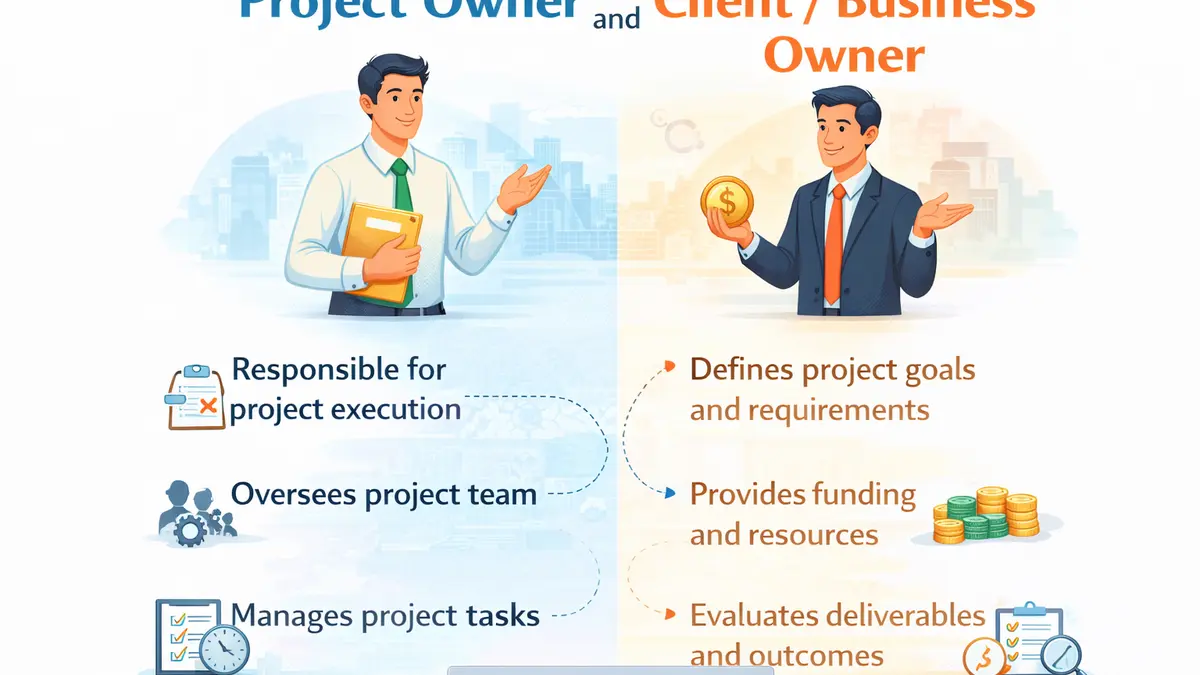
The golden triangle becomes powerful only when it is embedded in clear governance, because without rules, every trade-off gets renegotiated and the project loses coherence. You need an engaged sponsor who accepts trade-off accountability, a change mechanism that forces option comparison, and an explicit prioritization rule that protects the team from contradictory requests. Governance must include both business and technical perspectives, because quality depends on fit to need and system robustness, and you avoid silo failure when acceptance criteria are shared. In 2026, visibility is a competitive factor, because many organizations still spend significant time consolidating status manually, which delays decisions and allows small drifts to become major overruns. A triangle-aligned governance rhythm shortens the time between signal and decision and creates trust because stakeholders see why choices were made. This is also where tooling matters: you do not buy software “for dashboards,” you buy speed of decision and traceability of compromise.
Triangle-aligned metrics: measure what matters, at the right cadence
A useful dashboard does not collect metrics for their own sake; it reflects the three constraints with indicators that trigger action. For time, track milestone progress, forecast slippage, blocking dependencies, and rework signals, because delays often accumulate quietly before becoming visible at the end. For cost, track capacity consumption, committed spend, remaining effort, and the cost impact of approved changes, so you can see whether the trajectory stays viable and where drift originates. For quality, track critical defects, test coverage on critical flows, compliance with acceptance criteria, user satisfaction on a defined scope, and post-release stability, because a “on-time” release that fails in production is a delayed failure. The right cadence depends on context, but the principle stays the same: measure often enough to correct early without drowning teams in reporting, and connect every alert to an explicit triangle decision. Over time, this creates a repeatable operating system for delivery rather than a heroic, crisis-driven culture.
The triangle in Agile and hybrid delivery: what changes and what stays true
Agile does not eliminate the triple constraint; it changes how you reveal it and how frequently you renegotiate trade-offs, because work is delivered in increments and value is re-evaluated continuously. In iterative delivery, “time” often becomes a release cadence, “cost” is managed through team capacity and funding duration, and “quality” is protected through a strict definition of done and automation. The most flexible vertex is typically scope, because Agile frameworks accept shipping fewer features as long as essential value is delivered and learning confirms direction. In hybrid environments, teams combine enterprise milestones with iterative execution, which requires strong governance to avoid the trap of combining the rigidity of predictive planning with the uncertainty of discovery work. The core remains: when a constraint hardens, you must create flexibility elsewhere, and the triangle remains the simplest common language across stakeholders with different methodological preferences. In 2026, this shared language is especially important because organizations mix delivery models inside one portfolio and need consistent decision logic.
Protecting quality under acceleration: treat debt as a future cost, not a hidden shortcut
When time pressure rises, teams are tempted to cut what is less visible—testing, refactoring, documentation, automation—but those cuts shift cost into the future and weaken the next release. The golden triangle helps you name the reality: lowering quality is a trade-off in cost and time, not an optimization, and you must manage it with safeguards. One safeguard is to define non-negotiable thresholds, such as zero critical defects before go-live, minimum coverage for critical paths, or dedicated hardening capacity each iteration, because thresholds prevent silent erosion. Another safeguard is to track debt as a funded backlog with a repayment plan, so stakeholders understand what the organization “borrows” when it accelerates and when it will repay that debt. This approach protects stakeholder trust because you replace vague risk with clear conditions and you keep the team from normalizing shortcuts that later become expensive. In 2026, that discipline matters even more because speed tools amplify output, and output without quality control amplifies instability.
Practices and tools: make trade-offs faster and more reliable
The golden triangle becomes easier to apply when you support it with practical planning and delivery habits that reduce uncertainty, because trade-offs depend on the quality of information available. Strong initiation clarifies scope boundaries, dependencies, acceptance criteria, and the definition of success, then it sets explicit tolerances for each triangle constraint so decisions do not become emotional later. Realistic planning combines estimation, capacity management, milestone logic, and a release strategy, because a date only matters if the route to it stays coherent. Lightweight change control with one validation channel and a stable prioritization rule prevents scope from drifting through small, untracked requests. In 2026, organizations also invest heavily in platforms to improve visibility, collaboration, and governance, which reflects how valuable fast, traceable decisions have become under pressure. For perspective, one 2026 projection cites the project management software market at $10.56B in 2026 with growth expectations toward $39.16B by 2035, which signals sustained demand for better execution systems.
- Declare the dominant constraint: fixed date, capped budget, non-negotiable quality threshold, or mandated scope.
- Translate the request into impact: affected deliverables, activities, risks, and dependencies, not just “extra work.”
- Offer 2–3 scenarios: option A holds time, option B holds quality, option C holds cost, each with explicit consequences.
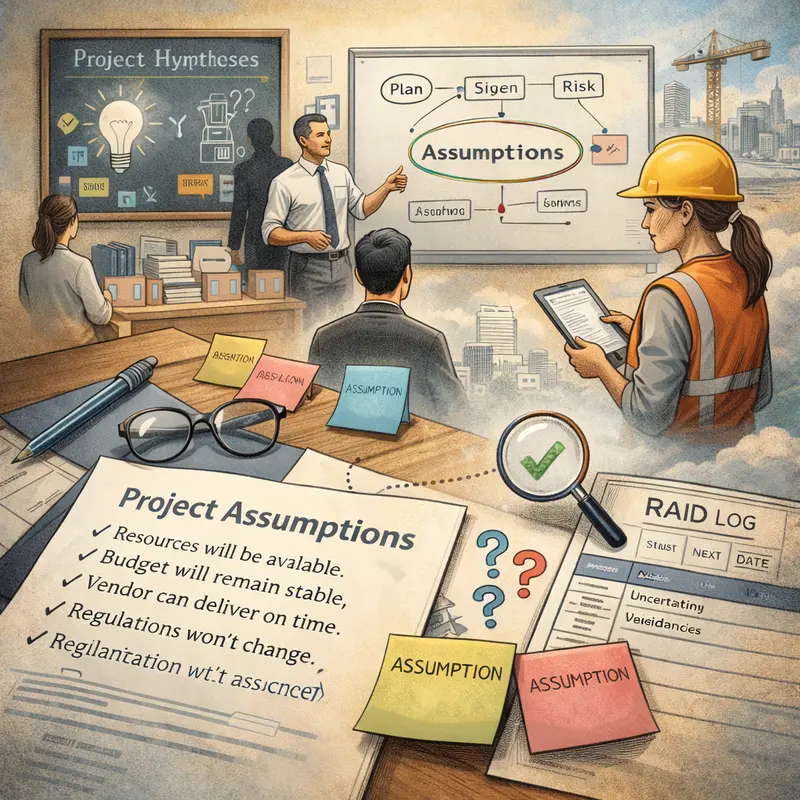
- Decide and record: assumptions, concessions, success criteria, and sponsor sign-off so the decision stays stable.
- Track triangle signals: time, cost, and quality indicators that trigger early correction rather than late surprises.
Common field mistakes: how to avoid using the triangle as a slogan
Projects rarely fail because the triangle is “wrong”; they fail because organizations use it superficially and avoid clarifying the rules of compromise. A frequent mistake is declaring everything top priority, which effectively denies constraints and creates constant pressure that erodes quality while increasing cost through rework and coordination overhead. Another mistake is accepting changes informally, without a decision mechanism, which turns each request into hidden debt and makes the plan incoherent. A third mistake is confusing “quality” with perfection, even though quality should be defined as fitness for purpose with an explicit risk level, which lets teams invest appropriately instead of overbuilding. Finally, many teams underestimate the role of governance and visibility, spending too much time reconstructing the “truth” from fragmented files and delayed status, which postpones trade-offs until the only options are expensive. A triangle-driven operating rhythm prevents this by making compromises explicit early and keeping expectations aligned as conditions change.
The “freeze everything” trap: when the triangle becomes a prison instead of a framework
Some environments try to freeze scope, budget, and date at kickoff and then “hold the line,” but this approach collapses as uncertainty rises, which is common in transformation, innovation, and digital delivery. The triangle does not claim you must freeze everything; it claims that when one variable shifts, you must decide consciously how you compensate, and controlled flexibility is more robust than rigid illusion. To avoid the trap, fix what must be fixed—regulatory dates, fiscal-year budget caps, safety requirements—then create flexibility through adjustable scope, staged releases, or prioritized backlogs. This gives executives a stable commitment while allowing teams to adapt without breaking the promise, which is the real point of the triangle. In 2026, where portfolios mix discovery and delivery and dependencies multiply, this “fixed plus flexible” pattern scales better than pure rigidity. The result is fewer crises and better conversion of strategy into shipped outcomes.
Beyond the triangle: limits, extensions, and modern success criteria in 2026
The golden triangle remains essential, but it does not always define success, because a project can hit budget and schedule and still fail on value, adoption, or stakeholder satisfaction. Modern organizations often add dimensions such as business value, risk, sustainability, security, and user experience, especially when products live long after delivery and impact is measured over multiple quarters. In practice, these dimensions do not replace the triangle; they connect to it, because improving security can increase cost and time, improving adoption can require more change management, and reducing risk can require more testing and stronger architecture. The right approach is to use the triangle for baseline trade-offs while explicitly defining additional success criteria as constraints or goals, so decisions remain clear and traceable. In 2026, this extension is also driven by AI adoption and hybrid operating models, which add governance and compliance requirements that must be reflected in what “quality” really means. The triangle stays the language, and the extensions provide the context that makes the language accurate.
Link the triangle to value: why “delivering” is not the same as “succeeding”
When you connect the golden triangle to value, you change the conversation from constraint compliance to outcome usefulness, which makes trade-offs easier to justify and easier to measure. This requires clarifying expected benefits, impact metrics, and assumptions early, then selecting a scope that maximizes value delivered under time and cost constraints. A common high-performing choice is to ship a core that produces measurable benefit quickly, then improve iteratively, rather than pursuing a “perfect” release that arrives too late and misses the market window. This value framing strengthens the triangle because it gives an objective basis to trade scope and quality investment, so you invest where marginal value is highest and avoid expensive polish with low returns. It also improves stakeholder buy-in because you explain decisions as rational benefit optimization rather than schedule defense. Over time, portfolios run more smoothly because teams stop optimizing for local metrics and start optimizing for outcomes that leadership actually cares about. This is one of the cleanest ways to make the triangle conversion-oriented without turning the content into sales talk.
Mini SEO FAQ: frequently asked questions about the Project Management Golden Triangle
What is the simplest definition of the golden triangle in project management?
The project management golden triangle describes the balance between Quality, Cost, and Time, and it states that if one constraint changes, at least one other must adjust to keep the project viable. This definition is intentionally simple, but it becomes highly operational when you define what quality means in measurable terms and set tolerances for cost and schedule. The triangle is mainly a sponsor negotiation tool: it turns vague requests into explicit exchanges, so you can commit credibly and avoid hidden sacrifices. In portfolio settings, it also protects teams by forcing leaders to choose what truly matters instead of demanding faster, cheaper, and better simultaneously. When consistently used, it creates a shared decision language across departments and reduces friction in change discussions.
Why do some frameworks use “scope” instead of “quality”?
Many English frameworks use Scope–Cost–Time because these are the most direct control levers: deliverables, funding, and schedule. In that view, quality is the outcome of how well you manage those levers, and it falls when you compress time or cost without adjusting scope. In Quality-explicit versions, quality becomes its own vertex to prevent it from being sacrificed silently, which often happens when a date is fixed and stakeholders assume scope and budget will not move. The two models align when you define quality thresholds, make acceptance criteria explicit, and treat scope as the most adjustable dimension when constraints tighten. This is why high-maturity organizations explicitly state what is fixed and what is flexible at kickoff rather than letting the answer emerge under stress. In 2026, this clarity becomes even more valuable as hybrid delivery models expand and teams need common ground across methodologies.
How can I use the triangle to get a faster sponsor decision?
You get faster sponsor decisions when you avoid abstract debate and present two or three concrete scenarios, each tied to a visible triangle trade-off. A practical set is: hold the date by reducing scope, hold quality by moving the date, or hold scope by increasing cost, with clear impacts and conditions for success. Decision speed increases when you include at least one quantitative order of magnitude, such as additional person-weeks, cost uplift, or reduced release content, because it removes ambiguity and prevents “free change” assumptions. Then you record the decision and define the rule for future changes, so the project does not get destabilized by informal requests. This approach works well in organizations where on-time and on-budget performance remains inconsistent, because it creates repeatable decision hygiene. Over time, sponsors trust delivery teams more because they see consistent logic and transparent trade-offs rather than late excuses.
Is the golden triangle compatible with Agile delivery?
Yes, the golden triangle is compatible with Agile, but it appears differently because Agile often funds stable teams over time and refines scope through incremental delivery and feedback. In many Agile contexts, time becomes a release cadence, cost becomes team capacity over a funding period, and scope becomes the primary flexible variable, which is perfectly consistent with the triangle’s trade-off logic. Quality must be protected through a strict definition of done, automation, and stable acceptance criteria, otherwise speed turns into debt and the next iterations slow down. In hybrid contexts, you must be even more explicit about what is fixed and what is flexible, because enterprise milestones can conflict with iterative discovery if you do not set clear governance rules. The triangle helps bridge that gap by giving all stakeholders a shared language for compromise, regardless of their methodological preference. In 2026, that shared language is one of the most practical tools for aligning multi-team portfolios and reducing friction across delivery models.
Read also: Succeeding in Your Projects.