PDCA (Plan-Do-Check-Act): The Complete Strategic Guide to the Deming Cycle for Continuous Improvement in 2026
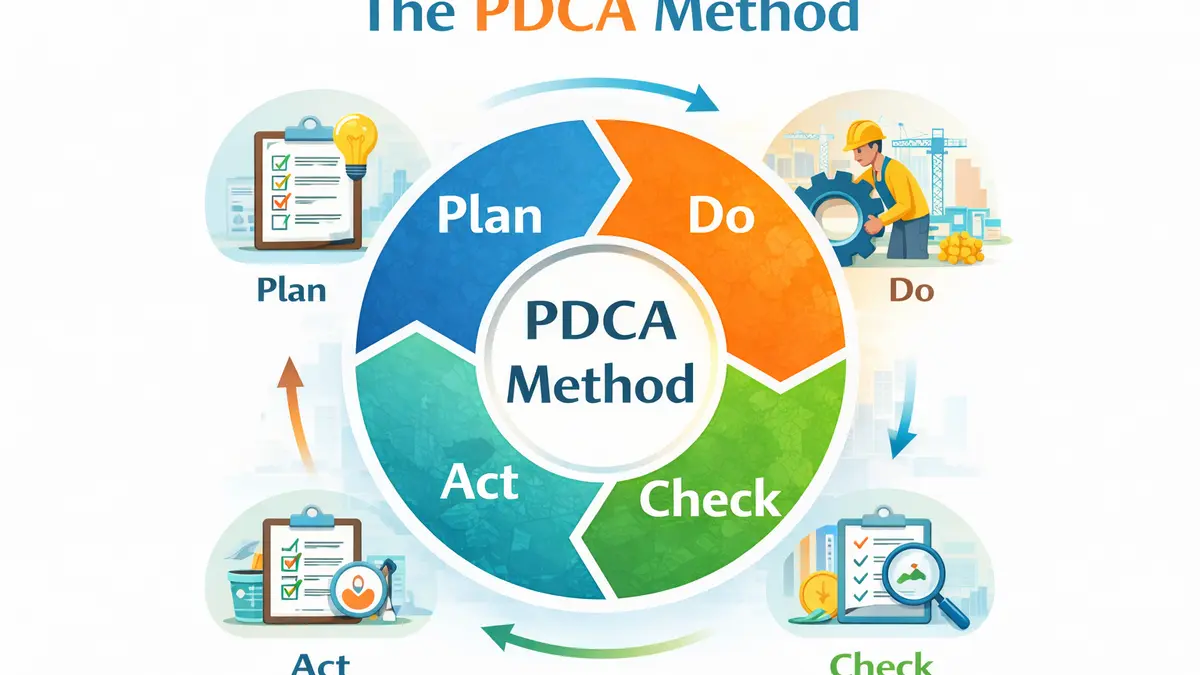
The PDCA cycle, also known as the Deming Cycle, remains one of the most powerful and structured frameworks for driving continuous improvement, reducing defects, and strengthening operational performance across industries. Used in manufacturing, services, IT, healthcare, and project management, this iterative methodology is built around four logical and disciplined phases: Plan, Do, Check, and Act. In 2026, organizations face accelerated digital transformation, higher compliance requirements, and increasing pressure on margins, making structured improvement models more critical than ever. According to a 2026 global operational excellence benchmark study, companies that formalize and document a PDCA-based improvement system report an average 18% reduction in quality defects within 12 months. Understanding PDCA goes beyond memorizing four steps; it requires mastering a data-driven decision framework, risk mitigation logic, and systematic process standardization.
Strategic Definition of PDCA and Foundational Principles
The PDCA methodology is a structured problem-solving and performance optimization framework grounded in experimentation and measurable outcomes. Each iteration follows a clear sequence: identify and plan an improvement, implement it on a limited scale, evaluate measurable results, and standardize or adjust based on evidence. This cyclical logic transforms improvement from a one-time initiative into a repeatable management discipline. By embedding structured feedback loops into daily operations, organizations strengthen learning capabilities, reduce uncertainty, and improve process stability. Unlike reactive management approaches, PDCA creates a proactive system focused on measurable impact and controlled change.
Origins of the Deming Cycle and Its Quality Management Roots
The PDCA cycle originated from the statistical process control work of Walter A. Shewhart and was later popularized globally by W. Edwards Deming. This historical background explains why PDCA is deeply connected to quality management systems and international standards such as ISO 9001. The model reflects a scientific management philosophy in which hypotheses are tested before large-scale deployment. Instead of relying on assumptions or intuition, organizations collect data, analyze results, and adjust processes accordingly. This evidence-based structure aligns perfectly with modern compliance expectations, governance standards, and traceability requirements.
PDCA vs. PDSA: Understanding the Distinction
The difference between PDCA and PDSA lies primarily in the interpretation of the third phase, where “Check” becomes “Study” to emphasize deeper analytical evaluation. In highly regulated or complex systems, the PDSA approach encourages more rigorous statistical analysis and reflection on results. However, in most operational environments, both models share the same objective: creating a structured feedback loop that drives continuous learning and performance improvement. The real value does not depend on terminology but on disciplined execution and robust data analysis. In 2026, organizations increasingly integrate digital analytics tools to enhance the depth of their “Check” or “Study” phase.
Why PDCA Remains a Core Performance Lever in 2026
Working on a similar project?
The economic and technological landscape of 2026 demands agility, resilience, and measurable performance from organizations operating in volatile markets. The PDCA cycle provides a systematic improvement structure that integrates risk management, KPI monitoring, and strategic alignment into daily operations. Businesses aiming to optimize costs, improve customer satisfaction, and increase operational reliability benefit from a framework that reduces uncertainty and strengthens accountability. By embedding PDCA within governance structures, leadership teams ensure that initiatives are aligned with measurable objectives rather than reactive decisions. This alignment reinforces strategic coherence and prevents fragmented improvement efforts across departments.
Risk Reduction Through Controlled Experimentation
One of PDCA's greatest strengths is its emphasis on small-scale testing before organization-wide deployment. Rather than implementing large changes without validation, teams pilot solutions in controlled environments and gather reliable data. This approach significantly reduces operational and financial risks associated with poorly tested transformations. In industries where downtime can cost tens of thousands of dollars per hour, this incremental strategy safeguards performance and stability. Controlled experimentation ensures that improvement efforts are both ambitious and responsible.
Strategic Alignment and Continuous Improvement Culture
PDCA fosters a sustainable continuous improvement culture by linking operational actions to strategic objectives through measurable indicators. Each cycle defines clear goals, responsibilities, timelines, and evaluation criteria, promoting transparency across teams. Employees understand how their actions contribute to performance outcomes, strengthening engagement and ownership. Over time, repeated PDCA iterations embed discipline and learning into the organization's DNA. This cultural transformation reduces resistance to change and enhances collaboration across functional areas.
The Four Phases of PDCA: Detailed Methodology and Deliverables
Plan: Define the Problem and Set Measurable Objectives
The Plan phase forms the analytical foundation of the PDCA cycle and determines the effectiveness of all subsequent actions. Teams begin by clearly defining the problem, analyzing root causes, and establishing measurable performance targets. Tools such as root cause analysis, SWOT analysis, Pareto charts, and the 5 Whys method support structured diagnosis. The outcome of this phase should be a documented action plan outlining responsibilities, timelines, required resources, and success metrics. Without a rigorous planning stage, improvement efforts risk addressing symptoms instead of underlying causes.
Do: Implement the Plan in a Controlled Environment
The Do phase translates strategy into action by executing the defined plan within a limited or pilot scope. Effective implementation includes stakeholder communication, training if necessary, and reliable data collection mechanisms. Organizations document activities carefully to ensure traceability and facilitate later analysis. The objective is not perfection but evidence generation that supports informed decision-making. Proper documentation during this phase significantly enhances the credibility of subsequent evaluation.
Check: Measure Performance and Analyze Gaps
The Check phase involves comparing expected outcomes with actual results using predefined KPIs and performance metrics. Teams evaluate quantitative data and qualitative feedback to identify discrepancies and patterns. Statistical analysis, dashboards, and performance reviews strengthen objectivity and prevent biased interpretations. Rather than simply labeling outcomes as success or failure, this stage focuses on understanding why results occurred. A rigorous evaluation phase enhances strategic clarity and prepares leadership for decisive action.
Act: Standardize Success or Adjust Strategy
The Act phase transforms insights into concrete organizational decisions, ensuring that successful improvements become standardized practice. When objectives are met, teams update procedures, formalize documentation, and deploy the solution more broadly. If results fall short, they refine assumptions and initiate a new iteration of the cycle. This disciplined loop strengthens organizational learning and institutionalizes improvement over time. The Act phase prevents stagnation by embedding adaptability into operational structures.
Supporting Tools and Integration with Management Systems
The effectiveness of the PDCA framework increases significantly when supported by complementary analytical and governance tools. Root cause analysis methods, prioritization matrices, and digital KPI dashboards enhance precision and transparency. Within a quality management system, PDCA serves as the structural backbone of strategic planning, internal audits, and management reviews. This systemic integration avoids isolated improvement initiatives and ensures alignment across departments. By connecting PDCA with enterprise risk management and compliance systems, organizations strengthen operational resilience.
- Root Cause Analysis to identify systemic issues
- 5 Whys Method to deepen problem investigation
- KPI Dashboards to monitor measurable outcomes
- Prioritization Matrix to rank improvement actions
- Internal Audits to validate effectiveness and compliance
Quantified Case Study: PDCA in Action
A manufacturing company facing a 7.5% defect rate on a production line launched a structured PDCA initiative to reduce defects to 4% within six months. During the Plan phase, analysis revealed that 60% of errors resulted from inconsistent machine calibration, leading to a targeted training and verification protocol. The Do phase implemented the solution on one shift for eight weeks, with detailed tracking of output quality. In the Check phase, defect rates dropped to 4.2%, validating the effectiveness of the corrective measures. The Act phase standardized calibration procedures across all shifts and integrated the protocol into official documentation, ensuring sustainable performance improvement.
PDCA and ISO 9001: Alignment with International Standards
ISO 9001 implicitly incorporates the PDCA logic throughout its clauses on context analysis, risk-based thinking, performance evaluation, and continual improvement. Each requirement supports the cyclical pattern of planning objectives, implementing processes, monitoring performance, and taking corrective action. Internal audits and management reviews represent structured Check phases that inform strategic decisions. By embedding PDCA into documentation and governance systems, organizations reinforce compliance while improving operational effectiveness. This alignment strengthens both certification outcomes and real-world performance results.
Common Mistakes and Critical Success Factors
Organizations frequently undermine PDCA effectiveness by neglecting disciplined planning or failing to define measurable KPIs. Skipping root cause analysis often leads to superficial corrective actions that do not address systemic weaknesses. Another common mistake involves inadequate documentation during the Act phase, preventing standardization and knowledge retention. Successful implementation requires leadership commitment, data transparency, structured governance, and cross-functional collaboration. When these elements are present, PDCA evolves from a theoretical concept into a powerful operational engine.
SEO-Optimized Mini FAQ About PDCA
What is the primary purpose of the PDCA cycle?
The primary purpose of the PDCA cycle is to provide a structured framework for continuous improvement by planning changes, testing them, measuring results, and standardizing or adjusting based on evidence. It reduces risk by promoting controlled experimentation instead of large-scale untested changes. This disciplined loop enhances process reliability, quality performance, and cost efficiency. Organizations use PDCA to align operational improvements with strategic objectives.
How long does a PDCA cycle typically take?
The duration of a PDCA cycle varies depending on process complexity, scope, and available resources, typically ranging from a few weeks to several months. A small operational improvement pilot may require four to eight weeks, while broader transformations demand longer monitoring periods. The key factor is the quality of data collected and the robustness of analysis during the Check phase. Rushed cycles without reliable measurement compromise decision accuracy.
Is PDCA compatible with Agile methodologies?
PDCA aligns naturally with Agile frameworks because both emphasize iteration, feedback loops, and incremental progress. Agile sprints mirror micro PDCA cycles by incorporating planning, execution, review, and adaptation. Combining these approaches enhances both speed and analytical rigor within project environments. In 2026, many hybrid organizations integrate PDCA with Agile to balance flexibility and structured governance.
Structured PDCA Implementation Template
An effective PDCA implementation template clearly documents each phase to prevent ambiguity and ensure accountability. It includes a detailed problem statement, measurable objectives, defined KPIs, and assigned responsibilities. The template also specifies timelines, required resources, data collection methods, and evaluation criteria. Finally, it formalizes the decision process for standardization or adjustment based on analyzed results, reinforcing disciplined continuous improvement.
- Define the problem and scope
- Set measurable objectives and KPIs
- Develop a structured action plan
- Measure results and analyze gaps
- Standardize success or adjust strategy
By consistently applying this structured model, organizations institutionalize continuous improvement, strengthen decision-making discipline, and embed sustainable performance management into their operational strategy.
| Phase | Objective | Key actions | Success indicator |
|---|---|---|---|
| PLAN | Define the improvement objective | Analyze the current situation, identify root causes, design the action plan | Validated diagnosis and structured plan |
| DO | Implement the action plan on a limited scale | Train teams, deploy the solution, document each step | Actions implemented as planned |
| CHECK | Evaluate the results obtained | Compare before/after metrics, audit deviations, collect feedback | Results measured and analyzed |
| ACT | Standardize or readjust based on results | Generalize if successful, correct if necessary, restart a new cycle | Decision made and process updated |
The PDCA wheel — continuous improvement cycle
Related Articles
- FMEA: Failure Mode and Effects Analysis Guide
- Cause and Effect Diagram: Ishikawa Method
- Six Sigma: Complete Methodology and Implementation Guide
Take the next step
Discover how LUCKiwi can transform your project management.