Colors Method (DISC): Definition, Profiles & Communication | LUCKiwi
Ever sent a direct, to-the-point email only to be told it sounded"harsh"? The issue likely wasn't personal; it was a clash of communication styles. Much of the friction we experience at work and home happens simply because we're speaking different behavioral"languages" without realizing it.
Imagine having a decoder ring for these interactions. That’s the core idea behind the Colors Method, a memorable framework based on the well-known DISC model. It provides a straightforward guide to understanding the predictable patterns in how people act, think, and communicate.
What Is the Colors Method? A Guide to People's "Operating Systems"
Think of the Colors Method as a tool for translating different human"operating systems." While everyone can accomplish a task, some are wired for immediate action, while others are built for careful planning. No single system is better—they just process the world differently.
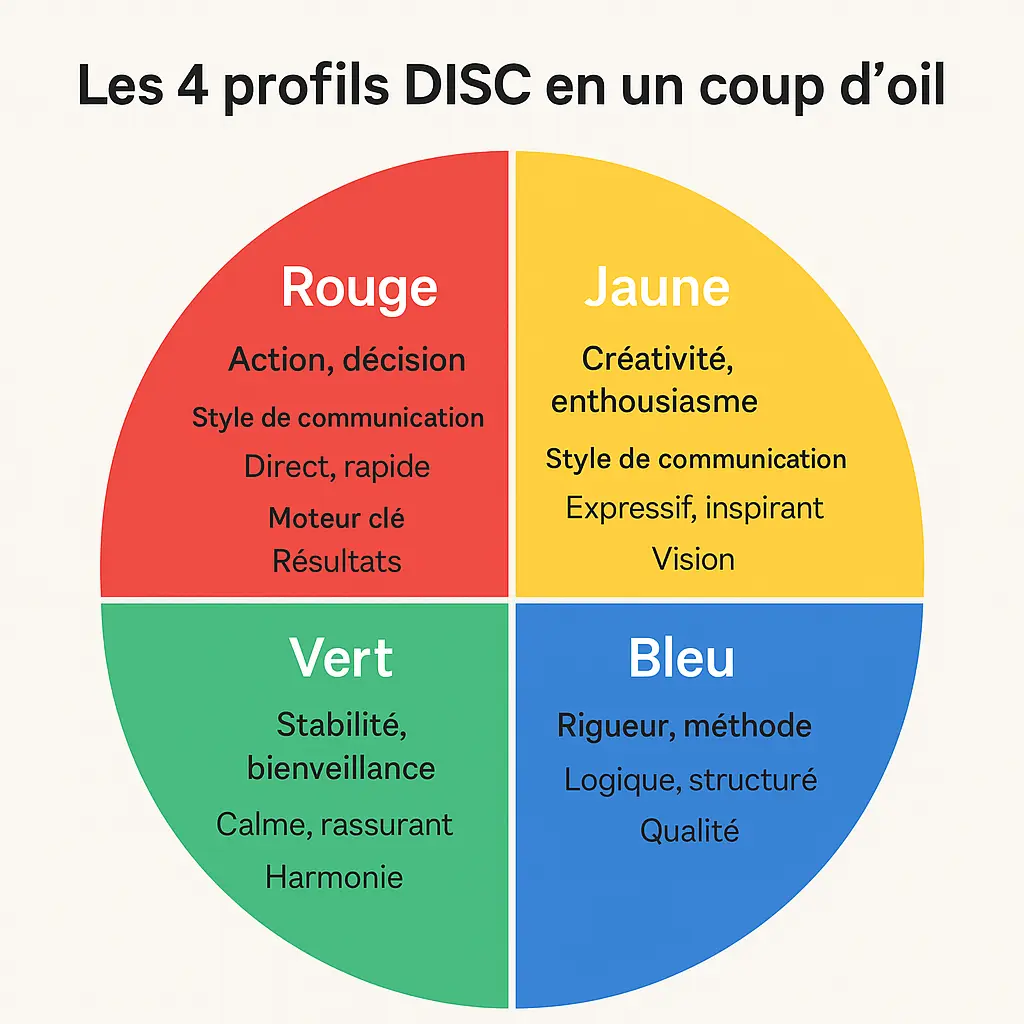
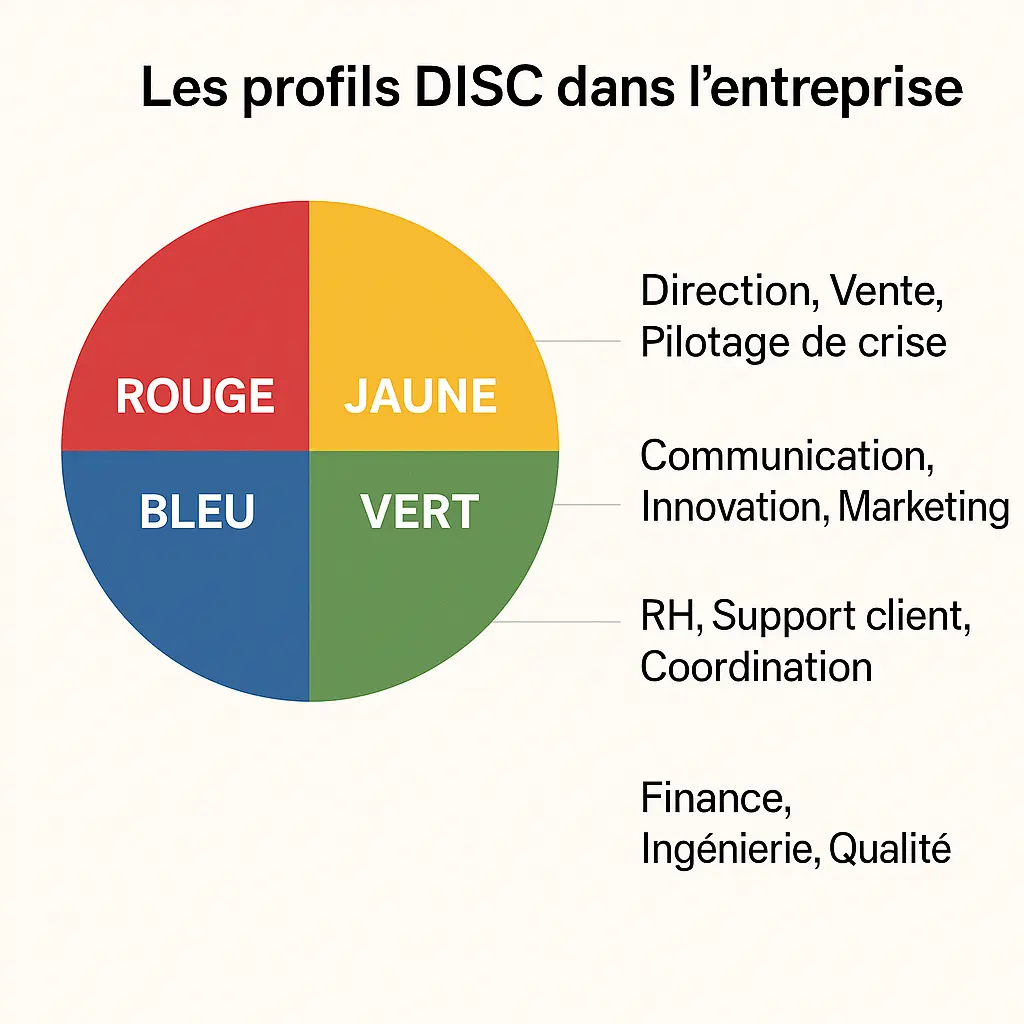
This approach groups our natural behavioral tendencies into four styles, each represented by a color: Red, Yellow, Green, and Blue. Based on the DISC assessment, these colors are a powerful shorthand for understanding whether someone is primarily driven by direct results (Red), enthusiastic connection (Yellow), supportive harmony (Green), or precise analysis (Blue).
This isn't a test that puts you in a box. It’s a guide to your preferred behaviors—your default settings. Understanding these preferences in yourself and others is the first step toward clearer communication and stronger teamwork.
The Red Profile: The Decisive and Action-Oriented Driver
The Red profile, or a "high D personality" in the classic DISC model, is the decisive driver. Motivated by results, their focus isn't on the process but on the destination, and they want to get there as efficiently as possible. They are born problem-solvers who thrive on taking immediate action.
You might recognize a Red as the person who:
Gets straight to the point in meetings.
Makes decisions quickly, even with incomplete information.
Loves a challenge and taking charge.
To communicate with this style, be brief, be brilliant, and be gone. Reds value directness and competence. Skip the small talk, get to the bottom line, and show them you respect their time by focusing on the"what" and the "why," not the "how."
The Yellow Profile: The Enthusiastic and Inspiring Socializer
If Reds are about the task, Yellows are about the people. This is the Yellow profile (the "I" for Influence in DISC), the social butterfly of the group. Fueled by optimism, collaboration, and the sheer joy of interaction, their energy is often infectious. They are natural influencers who thrive on bringing exciting ideas to the table and inspiring others.
You'll often spot a Yellow as the person who:
Loves to brainstorm big, exciting ideas (details can come later!).
Tells engaging stories that captivate a room.
Easily builds a wide and friendly social network.
Communicating with a Yellow requires warmth and enthusiasm. They want to feel a personal connection. To get on their wavelength, share their excitement, give them room to brainstorm, and focus on the "who"—the people involved and the positive impact.
The Green Profile: The Supportive and Stable Harmonizer
Where Yellows bring energy, the Green profile brings harmony. This is the "S" for Steadiness in DISC, the supportive and stable anchor of any group. Motivated by security and a genuine desire to help, they create calm, cooperative environments. Their dependable nature is essential for improving team dynamics, as they ensure everyone feels heard and valued.
You might recognize a Green as the person who:
Asks, “How is everyone feeling about this?” before making a decision.
Prefers a stable, predictable process over sudden changes.
Is an excellent and patient listener, making others feel comfortable.
Connecting with a Green requires sincerity and patience. Rushing them can feel unsettling. Instead, slow your pace, explain the “why” behind a change, and reassure them of the positive impact on the team.
The Blue Profile: The Accurate and Analytical Thinker
While Greens seek harmony, the Blue profile seeks accuracy. If you know someone who lives by the motto “If it’s worth doing, it’s worth doing right,” you’ve probably met a Blue. This is the analytical thinker of the group (the "C" for Conscientiousness in DISC). Driven by logic, quality, and precision, they are the essential quality control for any team.
You might recognize a Blue as the person who:
Asks for more data before making a decision.
Creates a detailed spreadsheet for everything (even planning a vacation).
Likes to work independently to ensure quality and avoid mistakes.
To connect effectively with a Blue, give them the details. Vague ideas or rushing them for an answer will only create friction. Provide the data they need, answer their questions patiently, and give them space to think things through.
Your Quick-Start Guide: How to Communicate with Each Color
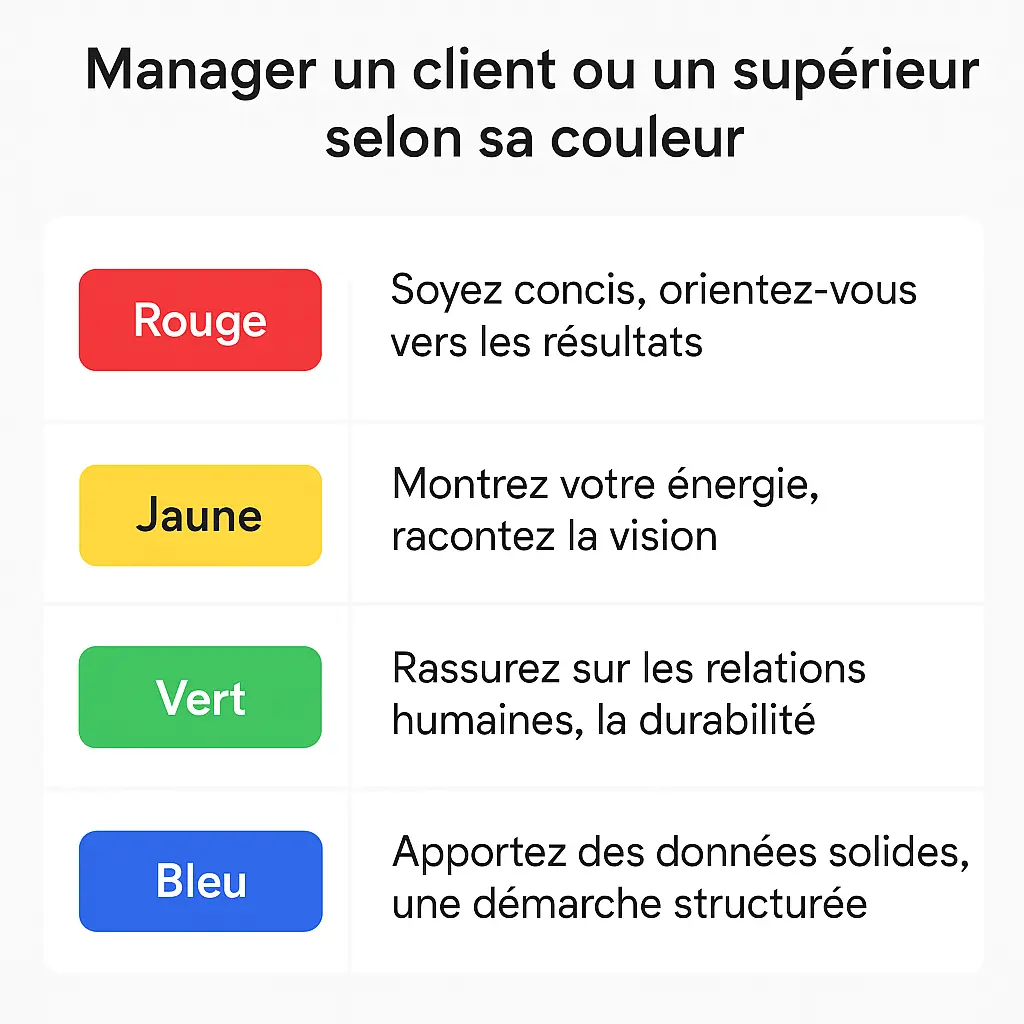
Knowing the four profiles is half the battle; the real magic happens when you adapt your communication style. Use this simple cheat sheet to adjust your approach on the fly.
To communicate with a RED: DO be direct and focus on the goal. DON'T waste time with small talk or fluff.
To communicate with a YELLOW: DO show enthusiasm and listen to their ideas. DON'T bog them down with tiny details right away.
To communicate with a GREEN: DO be patient, sincere, and ask for their opinion. DON'T spring sudden changes on them.
To communicate with a BLUE: DO provide data and be accurate. DON'T rush them for a decision.
What's Your Color? Why Most People Are a Rainbow
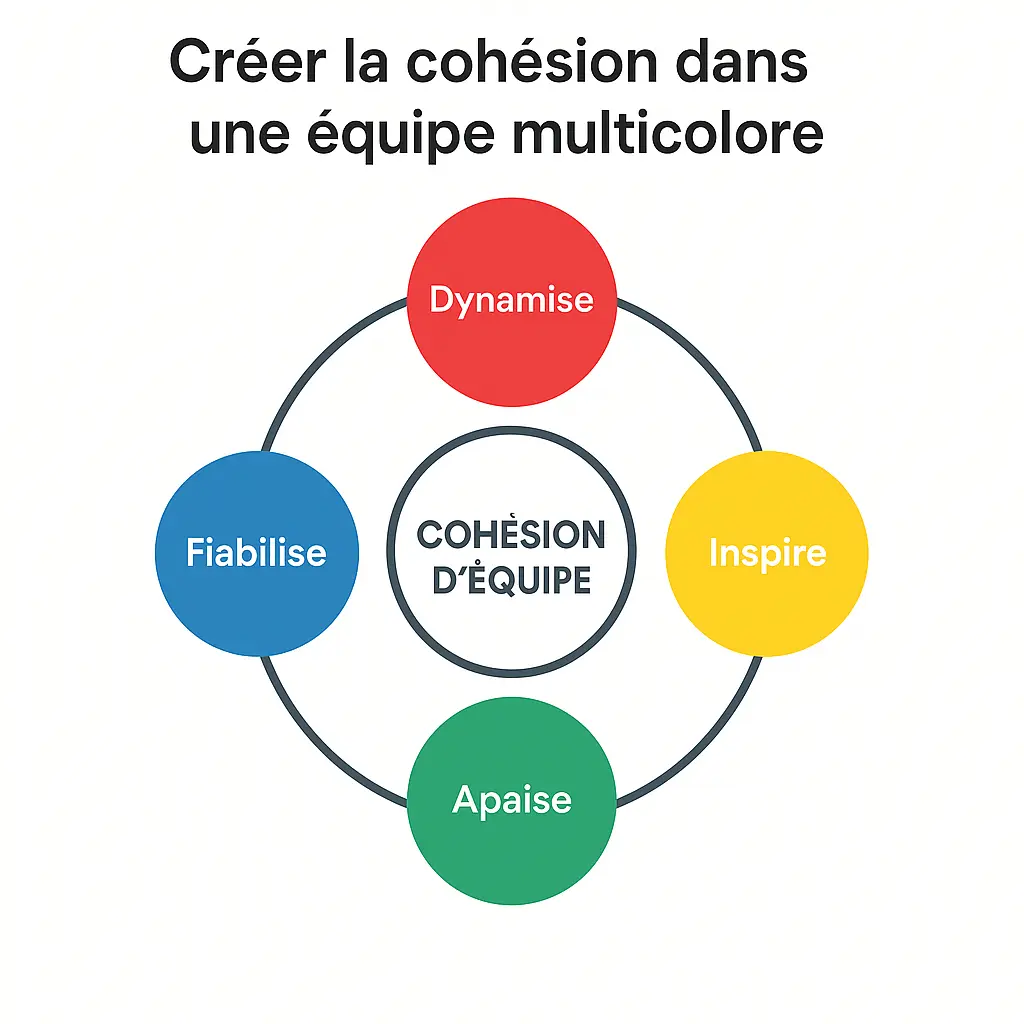
Most of us are a unique mix of all four colors—a behavioral rainbow. This explains why you might act differently depending on the situation. You might tap into your direct Red energy to lead a project, but rely on your supportive Green side when a friend needs advice.
Viewing the DISC model as a map, not a box, is crucial for its effective use. To explore your own profile, you can find a free DISC personality test online. This self-awareness is the first step from conflict to connection.
From Conflict to Connection: Your First Step to Better Relationships
That feeling of speaking a different language than a coworker or partner doesn't have to be a mystery. You now have a decoder for human behavior. Where you once saw friction, you can now recognize a simple difference in color.
Your next conversation is your first chance to practice. Instead of just hearing words, listen for the color. Are they focused on results, excitement, harmony, or accuracy? This simple shift turns potential conflict into connection, helping you improve relationships one conversation at a time.
External References
Call to Action
Take the free DISC test and discover your dominant color and your strengths as a manager.
Read also: Mastering Soft Skills.
Interactive DISC Test
0% completeChoose the option that sounds most like you. The style of the choices adapts to the DISC colors.
Question 1 / 12