Proof of Concept (PoC): Definition, Methodology, Governance and Strategic Validation Framework in 2026

The Proof of Concept (PoC) has become a central strategic instrument for organizations seeking to validate innovation, reduce uncertainty and protect capital allocation before full-scale deployment. In 2026, companies operate in an environment shaped by artificial intelligence, cloud-native architectures, automation, cybersecurity constraints and accelerating competitive cycles, making premature investment increasingly risky. A structured PoC framework enables decision-makers to verify whether a concept, technology or operational model can function under real-world constraints before committing substantial resources. According to a 2026 Gartner report, 72% of enterprise innovation initiatives now include a formal Proof of Concept phase prior to industrialization, reflecting a clear shift toward risk-managed experimentation. Far from being a simple technical test, the PoC has evolved into a governance tool that aligns stakeholders, clarifies assumptions and supports evidence-based executive decisions.
What Is a Proof of Concept? Definition, Scope and Strategic Purpose
A Proof of Concept is a structured validation process designed to demonstrate the technical, operational or economic feasibility of an idea before scaling it into production. It answers a fundamental question: “Can this work in our specific environment under measurable conditions?” Unlike exploratory research, a PoC operates within defined constraints, measurable success criteria and limited scope to control risk exposure. Its objective is not to build a market-ready product but to validate a critical assumption that determines whether further investment is justified. The outcome of a PoC is typically a documented go / no-go decision supported by quantitative data.
Core Objectives of a Proof of Concept
The primary objective of a PoC is to reduce uncertainty around high-risk assumptions that could compromise a project’s viability. These assumptions may concern system integration, algorithmic performance, process automation, infrastructure compatibility or scalability thresholds. In enterprise contexts, a PoC also serves as a persuasive instrument for executive committees, investors and external partners by providing tangible evidence rather than projections. It creates alignment between technical teams and business stakeholders by translating abstract innovation into measurable performance metrics. By focusing on validation rather than development, the PoC protects organizations from costly strategic miscalculations.
When Should You Conduct a Proof of Concept?
A Proof of Concept becomes essential when a project introduces significant technological novelty, operational complexity or financial exposure. Organizations typically initiate a PoC when integrating artificial intelligence, deploying blockchain architectures, automating mission-critical workflows or migrating to hybrid cloud environments. If projected investment exceeds $50,000 or affects core business operations, formal validation through a PoC significantly mitigates downside risk. Conversely, projects relying on well-established solutions with proven deployment patterns may not require a full PoC phase. Strategic maturity lies in knowing when validation is necessary and when it adds unnecessary delay.
Indicators That Signal the Need for a PoC
Several warning signs justify the implementation of a structured PoC. Lack of performance benchmarks, dependency on emerging technologies, uncertainty about data quality, unclear regulatory implications or doubts regarding scalability all indicate elevated project risk. Internal misalignment between business and IT departments also signals the need for a PoC, as it provides a neutral validation framework grounded in measurable results. When intellectual property ownership or data confidentiality issues arise, conducting a PoC within a defined contractual structure prevents future disputes. These signals collectively demonstrate that the PoC functions as both a risk mitigation and alignment mechanism.
Comprehensive Methodology for Building an Effective Proof of Concept
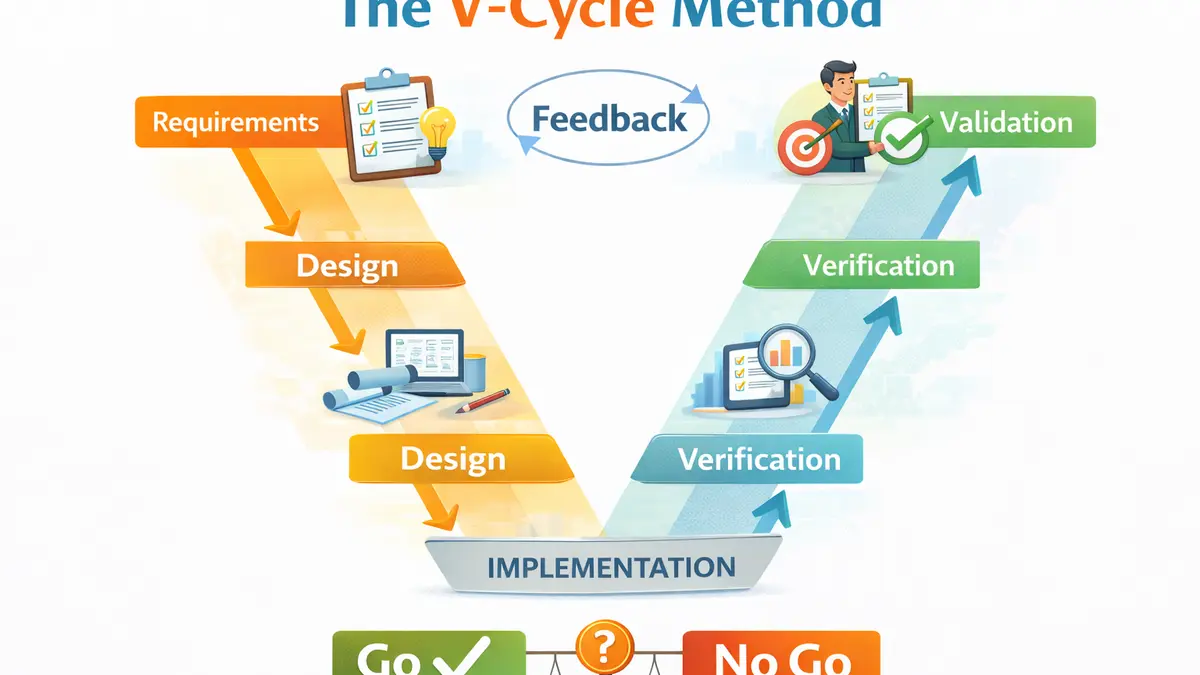
A successful PoC methodology follows a structured sequence of interdependent phases that ensure clarity, accountability and measurable outcomes. Leading organizations adopt a seven-step validation framework to prevent scope drift and budget overruns. This structured approach converts experimentation into strategic decision support rather than uncontrolled innovation. Each step reinforces the integrity of the final recommendation and strengthens executive confidence. The methodology below reflects best practices observed across enterprise innovation programs in 2026.
Step 1: Define the Problem Precisely
Every effective Proof of Concept begins with a clearly articulated problem statement linked to a strategic objective. The hypothesis must be testable, measurable and directly connected to operational impact, whether performance optimization, cost reduction or risk mitigation. Ambiguity at this stage compromises the validity of subsequent results and leads to misinterpretation. Decision-makers should ensure that the PoC tests one critical assumption rather than attempting to solve multiple variables simultaneously. Precision in problem definition establishes the foundation for credible validation.
Step 2: Establish Measurable Success Criteria
A PoC must rely on predefined quantitative benchmarks to maintain objectivity. Examples include achieving 95% model accuracy, reducing processing time by 30%, decreasing infrastructure costs by 20% or improving system uptime to 99.9%. These thresholds must be documented before execution to prevent retrospective bias in performance evaluation. Clearly defined success metrics transform the PoC into a disciplined validation exercise rather than an exploratory experiment. This approach enhances credibility when presenting findings to executive leadership.
Step 3: Define the Scope and Constraints
Limiting scope is essential to maintain focus and control costs during the Proof of Concept phase. A narrow but representative testing environment allows teams to evaluate critical assumptions without replicating full production complexity. Excessive scope increases budget consumption and dilutes insights, while insufficient scope may generate non-transferable results. The objective is to test under conditions that approximate real operations without committing full-scale resources. Strategic balance between realism and containment maximizes PoC effectiveness.
Step 4: Allocate Resources and Timeline
An effective PoC requires appropriate human expertise, financial allocation and technical infrastructure. Cross-functional collaboration between engineering, operations and business stakeholders accelerates validation while maintaining alignment. In 2026, the average enterprise technology PoC lasts between four and twelve weeks depending on complexity and data availability. Budget transparency and clear accountability structures prevent uncontrolled expansion. Resource discipline ensures that validation remains efficient and focused.
Step 5: Execute and Collect Structured Data
Execution represents the operational core of the Proof of Concept. Teams must collect structured, reproducible and traceable data using dashboards, analytics platforms and monitoring tools. The testing environment should replicate real operational constraints as closely as possible to ensure meaningful insights. Data integrity directly influences executive confidence in the outcome. Without reliable measurement systems, the PoC loses strategic credibility.
Step 6: Analyze Results Objectively
Results must be evaluated against predefined success criteria using transparent methodologies. Any performance gaps should be documented with contextual explanations rather than interpreted subjectively. Statistical rigor and comparative analysis strengthen the decision-making process. The analysis phase transforms raw metrics into actionable strategic recommendations. Objectivity remains essential to prevent confirmation bias and flawed investment decisions.
Step 7: Formal Decision and Next Steps
The final phase of a Proof of Concept culminates in a structured decision supported by documented findings. Three primary outcomes typically emerge: full-scale deployment, iterative refinement with a secondary PoC, or strategic discontinuation. The decision report should summarize methodology, performance data, risk assessment and financial implications. This documentation ensures traceability and accountability within governance structures. A well-conducted PoC always produces a clear, evidence-based direction.
Proof of Concept vs Prototype vs MVP
Confusion between Proof of Concept, prototype and Minimum Viable Product (MVP) frequently undermines innovation strategies. Each concept addresses a distinct validation objective within the product development lifecycle. The PoC verifies feasibility, the prototype evaluates design and user interaction, while the MVP tests market demand with a functional offering. Selecting the appropriate validation tool determines budget allocation and timeline efficiency. Understanding these differences prevents misaligned expectations and unnecessary resource expenditure.
- Proof of Concept: Validates technical or operational feasibility.
- Prototype: Demonstrates functionality or user experience.
- MVP: Launches a minimal product to test market response.
Governance, Risk Management and Intellectual Property
Beyond technical validation, a mature PoC framework incorporates governance structures and risk management policies. Steering committees, defined reporting cycles and documented responsibilities maintain oversight and strategic alignment. Intellectual property ownership must be contractually clarified, particularly when collaborating with external vendors or innovation partners. Confidentiality agreements and data protection measures protect sensitive assets during experimentation. Integrating governance into the PoC phase strengthens long-term scalability and regulatory compliance.
Quantitative Impact and Business Value of a PoC
The financial rationale behind a Proof of Concept lies in preventing costly misallocation of capital. Organizations that formalize PoC processes report up to 35% reduction in failed large-scale deployments compared to those that bypass structured validation. Early detection of technical limitations avoids sunk costs associated with infrastructure investments and integration failures. By limiting experimentation budgets to controlled environments, companies preserve strategic flexibility. In competitive markets, disciplined validation directly contributes to sustainable growth and resilience.
Concrete Proof of Concept Examples Across Industries
In artificial intelligence initiatives, a PoC may involve training a predictive model on 10,000 structured data points to validate accuracy thresholds before enterprise rollout. In manufacturing, an IoT-based PoC could measure a 15% reduction in unplanned downtime by deploying sensors on a limited production line. In financial services, a blockchain PoC may test transaction traceability within a sandbox environment before regulatory approval. Healthcare organizations frequently validate interoperability between digital health platforms before nationwide deployment. These scenarios illustrate how PoCs operate across sectors as structured validation mechanisms rather than speculative experiments.
Mini FAQ – Proof of Concept in 2026
How long should a Proof of Concept last?
The optimal duration depends on complexity, but most enterprise PoCs range between four and twelve weeks. Excessively long validation phases reduce agility and delay strategic benefits. Conversely, rushed PoCs risk generating incomplete data that weakens decision-making. Balanced timeline management ensures both rigor and efficiency.
Can a company skip the PoC phase?
Organizations may bypass a PoC when implementing standardized, low-risk solutions with established benchmarks. However, in innovative or high-impact initiatives, skipping the PoC significantly increases failure probability. Mature enterprises favor phased validation to protect capital and maintain competitive positioning. Evidence-based innovation consistently outperforms assumption-driven deployment.