
Project Workload Plan: Complete Methodology, Advanced Calculations, and Strategic Resource Management in 2026
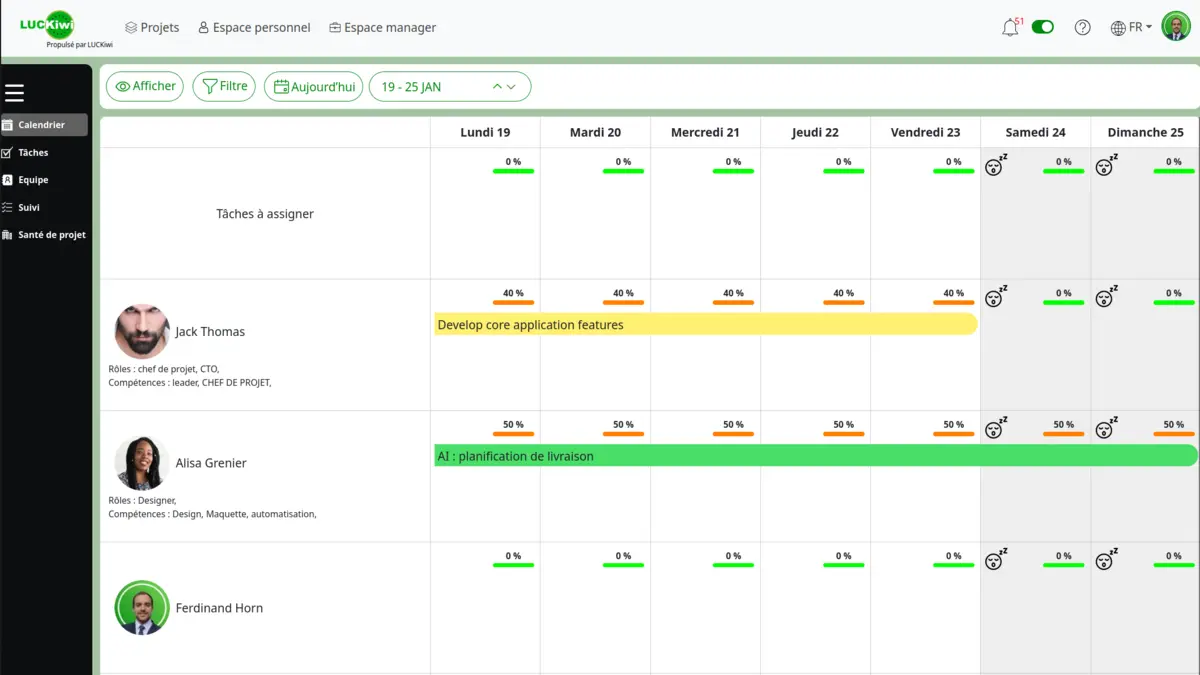
The workload plan has become one of the most critical performance levers in modern project management because it directly connects strategic priorities, operational capacity, and execution reality. In 2026, organizations operate in environments marked by talent shortages, accelerated delivery expectations, and constant budget arbitration, making precise resource capacity planning a strategic necessity rather than an administrative exercise. According to a 2026 industry report from the Project Management Institute, 67% of projects that exceeded deadlines showed inadequate resource forecasting at early stages, highlighting the financial and operational risks of weak workload planning. A robust workload plan structures allocation decisions, protects delivery commitments, and reduces chronic overutilization while improving profitability visibility. Its implementation requires structured methodology, reliable data, measurable indicators, and governance discipline.
Precise Definition of a Workload Plan and Its Strategic Role
A workload plan is a structured system used to distribute and forecast the work effort assigned to resources over a defined time period while comparing that effort to their actual available capacity. It integrates task estimates, milestones, priority levels, and organizational constraints to ensure optimal utilization of skills and time. Unlike a simple schedule, it quantifies effort in measurable units such as hours, days, or full-time equivalents. Its purpose is to simultaneously prevent overwork, which generates delays and burnout, and underutilization, which reduces productivity and margin performance.
Workload Plan vs. Project Schedule
A project schedule defines when tasks occur and how they are sequenced, whereas a workload plan determines whether sufficient capacity exists to execute those tasks within the planned timeframe. The schedule answers “when,” while the workload plan answers “with what level of effort and by whom.” In multi-project environments, this distinction becomes critical because a technically sound timeline can collapse if team capacity is overstretched. Aligning these two tools ensures that delivery commitments remain realistic and credible.
Workload Plan vs. Gantt Chart
A Gantt chart visually represents tasks and dependencies over time but does not inherently consolidate resource load across multiple assignments. The workload plan extracts data from scheduling tools and aggregates total effort per individual, role, or department. Without this consolidation, key experts may unknowingly operate at 120% or more of their weekly capacity, creating systemic delivery risk. Integrating workload analysis with timeline planning ensures execution feasibility.
Workload Planning, Staffing, and Capacity Planning
Staffing focuses on assigning specific individuals to specific tasks, while capacity planning evaluates overall organizational capability over mid- to long-term horizons. The workload plan bridges these dimensions by translating strategic capacity into operational allocation decisions. It supports arbitration between recruitment, outsourcing, reprioritization, or project deferral based on measurable gaps. This cross-functional impact explains why workload planning has become central for PMOs, HR leaders, and executive teams.
Core Components of a High-Performance Workload Plan
An effective workload plan depends on structured, reliable data without which forecasts quickly lose credibility. It requires accurate identification of resources, skills, contractual availability, planned absences, and all active initiatives. It must also incorporate non-project activities such as maintenance, support, internal meetings, and administrative tasks, which often consume between 15% and 30% of actual working time. The integrity of the workload plan depends entirely on the quality of these baseline inputs.
Resource and Skill Mapping
Resource identification must go beyond names and include competencies, seniority levels, specialization areas, and contractual constraints. A resource working at 80% contractual capacity with 25 annual leave days does not provide the same availability as a standard full-time allocation. Detailed skill mapping prevents bottlenecks, particularly when scarce expertise creates structural constraints. Clear visibility into capability distribution strengthens strategic allocation decisions.
Accurate Workload Estimation
Effort estimation is the most sensitive phase because systematic underestimation undermines the entire planning model. Mature organizations rely on historical data, estimation benchmarks, and reference models to improve accuracy. A task initially estimated at 10 days may require 12 days once meetings, interruptions, and unexpected revisions are considered. Integrating a contingency buffer of 10% to 20% significantly reduces variance between planned and actual effort.
Calculating Real Capacity
Theoretical capacity rarely reflects productive output because employees spend part of their time on unavoidable overhead activities. On average, a full-time professional may only deliver approximately 6 productive hours per day out of a 7- or 8-hour contractual schedule. The workload plan must deduct vacations, training sessions, public holidays, and recurring non-billable time from projections. Distinguishing between gross and net capacity is essential to realistic forecasting.
Step-by-Step Methodology to Build a Robust Workload Plan
Constructing a workload plan requires a structured approach linking strategic intent to operational execution. The process begins with data consolidation, continues with provisional allocation, and relies on continuous monitoring of deviations. Each phase requires validation to ensure alignment between executive priorities and team capabilities. Governance clarity ensures consistent decision-making quality.
Step 1: Data Collection and Consolidation
The first step involves consolidating all active projects, upcoming initiatives, and recurring operational activities across the chosen time horizon. Both confirmed and pipeline projects should be included to anticipate future resource constraints. Units of measurement must be standardized to enable accurate aggregation and comparison. A centralized data source reduces subjective decision-making and improves analytical reliability.
Step 2: Preliminary Resource Allocation
Initial allocation matches required competencies with available capacity while respecting strategic priorities and contractual constraints. Allocations should not exceed 100% of net available capacity over the analyzed period. In agile environments, these allocations may evolve sprint by sprint but must remain framed by a consolidated overview. Managerial validation ensures transparency and accountability.
Step 3: Load vs. Capacity Gap Analysis
Gap analysis forms the analytical core of workload planning because it highlights overload or underutilization periods. Sustained overload above 110% over several weeks signals high probability of delivery delays or quality degradation. Persistent underutilization reveals inefficiencies or opportunities for new project intake. These measurable thresholds enable proactive decision-making.
Step 4: Adjustment and Arbitration
Adjustments may involve workload smoothing, milestone postponement, temporary reinforcement, or structural hiring. Each option must be evaluated based on cost impact, delivery timeline, and associated risk exposure. Decision matrices support objective prioritization and increase stakeholder alignment. Through structured arbitration, the workload plan becomes a strategic governance tool rather than a static spreadsheet.
Key Metrics and Continuous Monitoring
Effective workload management depends on clear, regularly updated performance indicators that support rapid intervention. High-performing organizations update workload dashboards at least monthly, and weekly in fast-changing environments. Tracking remaining effort alongside actual consumption ensures forward-looking visibility rather than retrospective analysis. Discipline in updating data determines decision accuracy.
- Resource utilization rate by individual and team
- Planned vs. actual workload variance
- Remaining available capacity
- Number of critical resources in overload
- Total outsourced or subcontracted hours
Monitoring these metrics enhances anticipation capability and reduces crisis-based management. Visual dashboards facilitate collective understanding and strengthen arbitration discussions. Integrating financial data further links workload planning with margin control and profitability analysis. This multi-dimensional integration reinforces its executive value.
Excel vs. Dedicated Resource Management Software in 2026
As of 2026, many small and mid-sized organizations still rely on Excel for workload planning due to its flexibility and accessibility. However, limitations quickly emerge in multi-project environments with more than 20 active contributors. Manual consolidation, version control issues, and error risks increase proportionally with complexity. Tool selection depends on scale, update frequency, and decision-making requirements.
Dedicated resource management software automates consolidation, enables scenario simulation, and provides real-time visualization of load-capacity gaps. It enhances collaboration between project managers, PMOs, finance teams, and executives while reducing manual data errors. The transition threshold typically appears when maintaining Excel files consumes more than five hours per week of administrative effort. Organizational maturity and growth trajectory also influence the decision.
Managing Overload: Structured Decision Framework
Overload remains one of the most significant risks in multi-project environments because it simultaneously threatens timelines, quality, and employee engagement. A well-structured workload plan identifies peaks early enough to implement corrective measures. Decisions must rely on objective indicators rather than managerial intuition alone. A structured framework reduces internal conflict and improves alignment.
- Reprioritize or deprioritize initiatives based on strategic value
- Postpone non-critical milestones
- Reinforce teams through subcontracting or hiring
- Temporarily reallocate underutilized resources
- Reduce or adjust project scope
Each alternative should be assessed for budgetary impact, risk exposure, and client satisfaction implications. Chronic overload in critical expertise areas may justify structural investment rather than temporary fixes. Transparent data sharing improves acceptance of difficult decisions. The workload plan thereby supports sustainable performance.
Mini SEO FAQ
What is the difference between a workload plan and a project schedule?
A project schedule organizes tasks chronologically, while a workload plan quantifies the effort required and verifies whether sufficient capacity exists. The schedule focuses on time sequencing, whereas workload planning focuses on resource feasibility. Without workload analysis, a schedule may appear valid but remain unachievable. Both tools must operate in alignment.
How do you calculate real resource capacity?
Real capacity is calculated by deducting vacations, planned absences, training, and non-productive time from contractual availability. Out of approximately 220 annual working days, net productive capacity may range between 170 and 180 days depending on context. Including contingency buffers increases reliability. Accurate capacity calculation is foundational to workload integrity.
How often should a workload plan be updated?
The update frequency depends on project complexity and portfolio size, but monthly updates represent a minimum best practice. Agile or highly dynamic environments benefit from weekly revisions to maintain precision. Infrequent updates rapidly reduce decision relevance. Regular review ensures sustained accuracy and strategic alignment.
Mastering the workload plan in 2026 extends beyond operational scheduling and becomes a strategic governance instrument linking capacity, priorities, and financial performance. Organizations that embed structured workload management significantly reduce delays and improve margin predictability. Methodological rigor and high-quality data determine long-term effectiveness. When executed correctly, workload planning transforms resource management into a competitive advantage.