Project Roadmap: Definition, Complete Method, Examples and Best Practices to Drive Performance in 2026

The project roadmap has become a strategic cornerstone in 2026 for organizations seeking clarity, alignment, and controlled execution in complex environments. Companies that consistently deliver on time no longer rely solely on detailed schedules or isolated Gantt charts, they use a high-level strategic visualization that connects objectives, milestones, priorities, and stakeholders within a coherent trajectory. According to a 2026 global study published by the Project Management Institute, 71% of high-performing projects operate with a formally documented and shared roadmap, compared to only 38% of underperforming initiatives. This performance gap highlights the value of a structured roadmap that bridges strategic intent and operational execution. A well-designed roadmap does not attempt to describe every task, instead it clarifies major phases, critical milestones, dependencies, and measurable outcomes to provide a stable yet adaptable strategic framework.
What Is a Project Roadmap?
A project roadmap is a strategic and visual representation of a project’s major phases, milestones, objectives, and priorities over a defined time horizon, typically quarterly or annual. It offers a high-level perspective that supports decision-making and stakeholder alignment without diving into task-level detail. Unlike operational planning documents, the roadmap focuses on direction, sequencing, and value delivery rather than daily execution. Its primary purpose is to translate strategic intent into a structured progression of initiatives while maintaining clarity for executive, operational, and cross-functional audiences.
Project Roadmap vs Project Plan vs Gantt Chart
The distinction between a project roadmap, a project plan, and a Gantt chart is essential for structured governance and effective project management. The roadmap outlines strategic direction and major phases, whereas the project plan defines scope, responsibilities, budgets, risk management frameworks, and governance structures. A Gantt chart focuses on task-level scheduling, dependencies, and specific durations, often broken down weekly or daily. High-performing organizations integrate these tools hierarchically, using the roadmap as the strategic layer, the project plan as the structural backbone, and the Gantt chart as the operational execution instrument.
Project Roadmap vs Product Roadmap
A product roadmap centers on feature evolution, customer value, innovation cycles, and market positioning, while a project roadmap may address transformation programs, infrastructure deployments, compliance initiatives, or organizational change. Although both formats rely on milestones and sequencing logic, the project roadmap integrates governance, resource allocation, and cross-functional coordination more explicitly. In 2026, digital transformation programs often require alignment between multiple product roadmaps and an overarching project roadmap to ensure strategic coherence. This structural alignment strengthens portfolio visibility and reduces fragmentation across initiatives.
Strategic Objectives of a Project Roadmap
A project roadmap functions as a strategic alignment mechanism that supports prioritization, communication, and decision-making at the executive level. It clarifies objectives, highlights critical dependencies, and ensures that resources are allocated according to measurable outcomes rather than reactive pressures. In fast-evolving environments where organizations manage an average of 15 strategic initiatives simultaneously, maintaining a consolidated strategic view becomes a competitive advantage. The roadmap reduces ambiguity, prevents initiative overload, and strengthens governance transparency. By formalizing direction and sequencing, it enhances organizational focus and mitigates execution risk.
Stakeholder Alignment
One of the most valuable contributions of a project roadmap lies in its ability to align diverse stakeholders around shared priorities. By explicitly defining major milestones, expected deliverables, and time horizons, the roadmap minimizes conflicting interpretations and competing expectations. Executive sponsors gain visibility into strategic progress, operational teams understand sequencing logic, and external partners clearly see commitment timelines. This transparency fosters trust, reduces friction, and improves cross-functional collaboration in complex project environments.
Strategic Prioritization and Resource Arbitration
The roadmap enables effective prioritization by identifying initiatives with the highest strategic impact and sequencing them logically. It prevents resource dilution by limiting simultaneous execution overload and clarifying what must happen first to unlock subsequent phases. When budget constraints or capacity limitations arise, the roadmap becomes a rational framework for arbitration decisions. Organizations that integrate roadmap-driven prioritization report measurable efficiency improvements, including up to 25% reduction in duplicated efforts across departments. Structured prioritization ensures that strategic value creation remains the central focus of project governance.
Core Components of an Effective Project Roadmap
An effective project roadmap integrates strategic clarity with operational feasibility while maintaining visual simplicity. It must articulate a clear vision, measurable objectives, structured milestones, and coherent sequencing across phases. The roadmap should also reflect resource logic and highlight critical dependencies without becoming overloaded with execution details. When properly designed, it provides a transparent representation of direction, progress, and anticipated outcomes.
Strategic Vision and Measurable Objectives
The roadmap begins with a clearly defined strategic vision that articulates the project’s overarching purpose and long-term ambition. This vision translates into measurable objectives, often structured through KPIs or OKRs that quantify expected outcomes. Linking each major phase to performance indicators reinforces accountability and strengthens strategic coherence. For example, objectives may include increasing operational efficiency by 18%, reducing system downtime by 30%, or achieving full compliance within 12 months. Quantified targets ensure that progress evaluation remains evidence-based and aligned with business priorities.
Milestones, Deliverables, and Dependencies
Milestones mark key transition points in the project lifecycle and provide structured checkpoints for validation and governance. Deliverables represent tangible outputs such as validated prototypes, regional rollouts, or production releases that demonstrate measurable advancement. Dependencies clarify sequencing logic and prevent bottlenecks caused by overlooked interconnections between initiatives. Integrating these three dimensions within the roadmap enhances predictability and supports proactive risk management.
Step-by-Step Method to Build a Project Roadmap
Building a project roadmap requires a structured methodology that balances strategic analysis with stakeholder engagement and realistic feasibility assessment. The process transforms abstract ambitions into sequenced initiatives supported by macro-level resource estimation and governance checkpoints. Effective roadmap construction demands cross-functional input to ensure that dependencies and constraints are identified early. A disciplined approach prevents superficial documentation and increases roadmap credibility.
Structured Creation Process
- Define the strategic vision and measurable objectives.
- Identify key stakeholders and capture critical expectations.
- Determine major milestones and core deliverables.
- Sequence phases logically based on dependencies.
- Estimate macro resources and validate feasibility.
- Design the visual roadmap and organize communication cycles.
Each step reinforces structural coherence and reduces misalignment between strategy and execution. The visual representation should reflect prior analytical work rather than replace it. Early stakeholder involvement increases ownership and mitigates resistance during implementation. A structured roadmap creation process strengthens governance maturity and execution reliability.
Concrete Project Roadmap Examples
A typical digital transformation project over twelve months may be divided into four quarterly phases: initial assessment, solution design, pilot deployment, and full-scale rollout. Each quarter includes two or three strategic milestones, such as architecture validation or system go-live approval. The roadmap highlights dependencies between data migration and user training to prevent scheduling conflicts. This high-level visualization enhances executive communication and provides clarity for steering committees.
Organizational Transformation Roadmap Example
In an organizational restructuring initiative, the roadmap may be structured around strategic workstreams such as governance redesign, process optimization, technology implementation, and cultural alignment. Each stream includes measurable milestones, for example, approval of a new competency framework or enterprise-wide deployment of collaboration tools. Visual segmentation by workstream improves accountability and clarifies ownership boundaries. This structure supports cross-department coordination and reduces silo-driven inefficiencies.
Best Practices and Common Mistakes
An effective project roadmap avoids two primary risks: excessive detail and excessive abstraction. Overly detailed roadmaps become unreadable pseudo-schedules, while overly vague ones lack strategic credibility and fail to support decision-making. Regular updates are essential, as static roadmaps quickly lose relevance in dynamic environments. In 2026, mature organizations conduct formal quarterly reviews to reassess assumptions, validate milestones, and adjust sequencing where necessary. Continuous refinement preserves strategic integrity while maintaining flexibility.
Quality Criteria for a High-Performance Roadmap
A high-quality roadmap clearly links vision to measurable objectives, distinguishes strategic milestones from operational tasks, and highlights critical dependencies without overwhelming the audience. It remains visually readable across presentation formats, including mobile displays and executive dashboards. Governance checkpoints are integrated to support structured decision-making and risk mitigation. Continuous feedback loops ensure alignment between roadmap assumptions and real-world execution data.
Tools and Formats for Creating a Project Roadmap
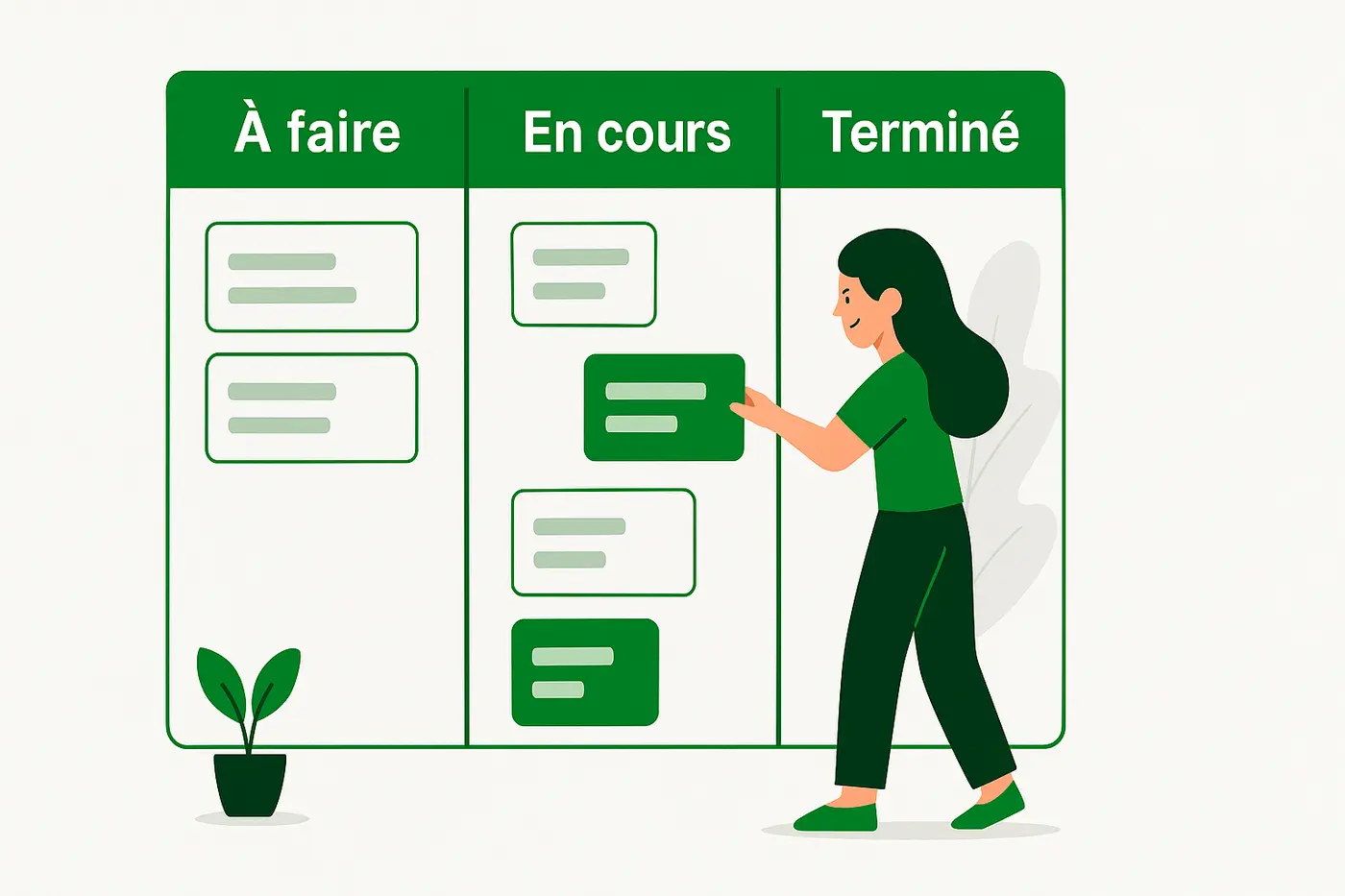
Modern project management software platforms offer dedicated roadmap visualization modules that integrate with backlog management, Gantt scheduling, and Kanban workflows. Organizations may choose specialized enterprise tools or flexible collaborative solutions depending on complexity and scale. The decisive criterion remains synchronization between roadmap milestones and real-time progress tracking data. Integrated systems prevent misalignment between strategic representation and operational reality.
FAQ – Frequently Asked Questions About Project Roadmaps
How often should a project roadmap be updated in 2026?
The optimal update frequency depends on environmental volatility, but quarterly reviews represent a widely adopted governance standard. Highly agile or innovation-driven environments may require monthly reassessment cycles to incorporate rapid feedback. Maintaining balance between strategic stability and adaptive responsiveness is critical. An updated roadmap strengthens transparency and executive confidence.
Who owns the project roadmap?
The project manager or program manager typically maintains operational ownership of the roadmap, while executive sponsors validate strategic direction. Shared accountability ensures both strategic alignment and execution control. Clear governance structures increase roadmap legitimacy and support resource arbitration. Formal ownership prevents fragmentation and enhances consistency across reporting cycles.
Does a roadmap replace detailed scheduling?
A roadmap does not replace detailed scheduling, it complements it by providing strategic visibility at a macro level. Operational plans remain necessary to manage daily tasks, workload distribution, and granular dependencies. Integrating both perspectives ensures alignment between long-term direction and short-term execution. Mature organizations orchestrate these layers within an integrated performance management framework.
Related Articles
- Gantt Chart: How to Plan Projects Visually
- Project Milestones: Strategic Planning and Control 2026
- Project Workload Plan: Complete Methodology and Resource Management 2026
Read also: Project Forecast and Scheduling.