MOA and MOE in Project Management: Roles, Responsibilities, Deliverables and Governance in 2026
The distinction between MOA and MOE continues to structure a large proportion of IT, digital, industrial and construction projects worldwide. These French-origin concepts—Maîtrise d’Ouvrage and Maîtrise d’Œuvre—translate in English to Project Owner and Project Delivery / Contractor, and they define the balance between business intent and technical execution. In 2026, as organizations navigate hybrid methodologies, AI-driven systems, cybersecurity constraints and increasing regulatory pressure, clarifying accountability has become a strategic necessity rather than an administrative formality. According to a 2026 project governance report, 47% of failed projects cite unclear roles and responsibilities as a primary contributing factor, confirming that governance clarity directly impacts performance. Understanding who defines value, who designs the solution, who validates outcomes and who executes delivery reduces scope creep, mitigates risk and strengthens return on investment.
Clear and Practical Definition of MOA and MOE
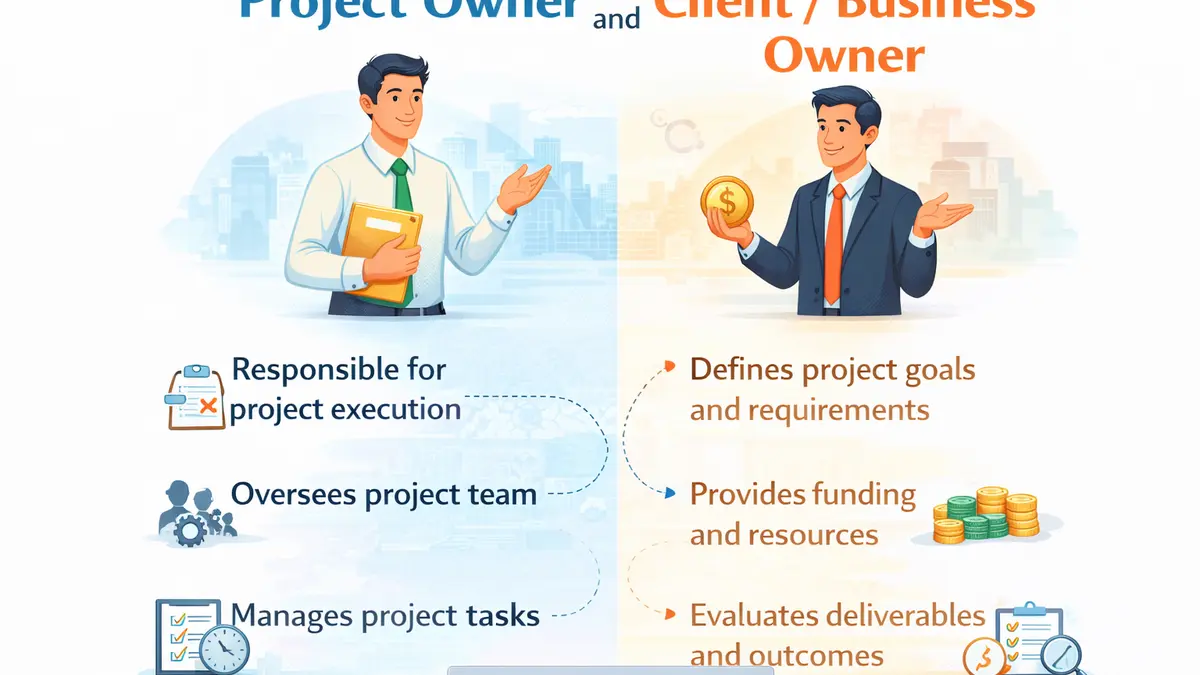
The MOA (Project Owner / Client) represents the business side of a project and carries responsibility for defining objectives, scope and expected value. This role ensures that the initiative aligns with strategic priorities and organizational goals while controlling the allocated budget. The MOA formalizes functional requirements, validates major decisions and accepts final deliverables once they meet agreed expectations. The MOE (Project Delivery / Contractor) is responsible for the technical design and implementation of the solution required to meet those expectations. This structural separation ensures that strategic intent remains distinct from technical execution while promoting structured collaboration.
Strategic Role of the MOA (Project Owner)
The MOA acts as the business sponsor and ultimate value guardian of the project. It defines measurable objectives, identifies key stakeholders and establishes functional priorities based on strategic impact. In IT environments, the MOA oversees the production of the business requirements document or functional specifications and validates deliverables during user acceptance testing. The MOA also retains authority over scope adjustments, funding decisions and high-level trade-offs between cost, time and expected benefits. Without an engaged and competent MOA, projects risk delivering technically sound solutions that fail to generate real business value.
Operational Role of the MOE (Project Delivery Team)
The MOE translates functional expectations into architecture, system design and operational deliverables. It evaluates feasibility, selects appropriate technologies and plans execution according to the chosen methodology, whether predictive, hybrid or agile. The MOE coordinates engineers, developers, architects, testers and infrastructure specialists while ensuring compliance with security, performance and quality standards. It manages risks at a technical level and reports progress, constraints and mitigation strategies to governance bodies. Its core responsibility is to deliver a reliable and scalable solution that fulfills the functional intent defined by the MOA.
Structured Comparison: Responsibilities and Deliverables
Project performance depends heavily on clear accountability boundaries between MOA and MOE. Ambiguity in decision rights often leads to scope disputes, budget overruns and delivery delays. A structured responsibility model clarifies ownership at each stage of the project lifecycle and prevents operational friction. While collaboration remains essential, the decision authority must remain well defined to ensure alignment. Separating strategic validation from technical implementation protects both business integrity and engineering quality.
Key Responsibility Matrix
- Strategic objectives definition: MOA accountable, MOE consulted
- Business requirements drafting: MOA accountable, MOE contributor
- Technology selection: MOE accountable, MOA consulted
- Detailed planning: MOE accountable, MOA informed
- Functional validation: MOA accountable
- Technical testing: MOE accountable
- Budget arbitration: MOA accountable
- Quality assurance: shared responsibility
Formalizing this distribution through a RACI matrix significantly strengthens governance. Projects exceeding 1 million USD in budget that implement structured responsibility mapping report up to 18% improvement in schedule adherence according to 2026 performance benchmarks. Written accountability reduces escalation conflicts and clarifies decision paths when trade-offs become necessary. It also enhances transparency across executive and operational levels. Governance clarity is therefore a measurable performance driver rather than an administrative constraint.
Lifecycle Perspective: Who Does What at Each Stage
The interaction between MOA and MOE evolves throughout the project lifecycle. Understanding how responsibilities shift from ideation to deployment and maintenance prevents misalignment. Each phase requires different levels of involvement and decision-making authority. A dynamic perspective allows organizations to anticipate governance friction points. Structured collaboration ensures continuity from strategic intent to operational delivery.
Initiation and Business Framing Phase
During the initiation phase, the MOA leads workshops, gathers stakeholder expectations and formalizes business objectives. It defines constraints such as regulatory requirements, timeline targets and budget envelopes. The MOE contributes feasibility insights and provides early technical risk assessments. Early collaboration prevents unrealistic functional commitments and identifies architectural constraints before formal approval. This stage lays the foundation for downstream stability and execution reliability.
Design and Development Phase
Once requirements are validated, the MOE assumes operational leadership. It produces technical specifications, builds system architecture and allocates development resources. The MOA remains actively engaged for major scope decisions and milestone validations. Continuous communication prevents interpretation gaps between functional intent and technical output. Effective coordination during this stage directly impacts delivery predictability and technical robustness.
User Acceptance and Deployment Phase
The acceptance phase restores central visibility to the MOA, which validates deliverables against original business requirements. User testing sessions identify functional gaps, which the MOE resolves prior to deployment. Structured acceptance processes reduce costly post-production corrections. Final approval formalizes value realization and marks the transition into operational use. Clear validation checkpoints protect both technical integrity and business alignment.
MOA, MOE and AMOA: Governance Reinforcement
The AMOA (Assistance to Project Ownership) supports the MOA when internal expertise is limited or when project complexity increases. AMOA professionals facilitate requirement formalization, governance structuring and stakeholder alignment. They act as translators between business expectations and technical implementation constraints. In digital transformation initiatives, AMOA involvement enhances change management and user adoption. While AMOA supports strategic clarity, decision accountability remains with the MOA.
MOA and MOE in Agile Environments in 2026
The widespread adoption of agile methodologies has reshaped but not eliminated the conceptual separation between MOA and MOE. In Scrum-based frameworks, the Product Owner frequently embodies many MOA responsibilities, including backlog prioritization and business validation. The development team collectively represents the MOE, accountable for delivering working increments. Despite iterative workflows, the distinction between defining value and delivering value remains fundamental. Agile governance requires continuous alignment rather than contractual rigidity.
Common Governance Pitfalls
Projects frequently encounter friction when role boundaries blur. A disengaged MOA leads to delayed validations and misaligned functional outcomes. Conversely, an over-controlling MOA that dictates technical architecture undermines MOE accountability and engineering coherence. An MOE that modifies scope without formal approval creates financial and contractual risks. Identifying and correcting these anti-patterns early strengthens delivery stability. Governance discipline reduces risk exposure and protects stakeholder trust.
RACI and Performance Steering
Implementing a structured RACI matrix clarifies who is Responsible, Accountable, Consulted and Informed for each major deliverable. This framework prevents duplication of effort and clarifies escalation paths. Coupled with steering committees and performance dashboards, it strengthens transparency and executive oversight. In 2026, high-performing organizations embed governance artifacts at project initiation rather than retrofitting them after conflict arises. Structured governance supports agility rather than hindering it.
SEO-Optimized FAQ: MOA and MOE Explained
What is the main difference between MOA and MOE?
The primary difference lies in accountability focus. The MOA defines the business need, controls the budget and validates final deliverables. The MOE designs and implements the technical solution required to meet that need. This separation ensures strategic clarity and operational efficiency. It protects both business objectives and engineering standards.
Is the MOA responsible for the project budget?
Yes, the MOA holds overall budget accountability and makes final financial trade-offs. While the MOE may propose cost optimization strategies, ultimate budget decisions remain under MOA authority. This ensures alignment between investment and expected value creation. Budget ownership reinforces strategic accountability. Clear financial governance reduces disputes and protects ROI.
Can MOA and MOE be combined in small organizations?
In smaller companies, one individual may temporarily assume responsibilities resembling both MOA and MOE. However, even in lean environments, distinguishing between defining the need and executing the solution improves objectivity. Formal separation reduces bias and enhances decision transparency. Governance clarity benefits organizations regardless of size. Structured accountability strengthens project maturity at every scale.
Read also: Project Management Tools.